How Does a WSFM Shaftless Automatic Extrusion Coating Machine Hold ±5% Thickness?
Datetime: 10/21/2026 3:07:00 PM Visit: 9
You're producing paper cups or food containers, and the base paper needs a coating on the inside for liquid resistance and a coating on the outside for print protection or heat sealing. Running that paper through a single-side line twice means two unwind cycles, two rewinds, and a handling step between them. A WSFM Shaftless Automatic Extrusion Coating Machine in the double-side configuration applies both coatings in one continuous pass, with the paper moving from the unwind through the first extrusion station, then the second, before it reaches the rewinder. This article explains how the two-sided sequence works, what the shaftless unwinding and hydraulic compounding systems contribute, and what to verify when you're specifying a double-side line for paper packaging production.
How Does the Double-Side Coating Sequence Work?
First Side, Then Second, on One Web Path
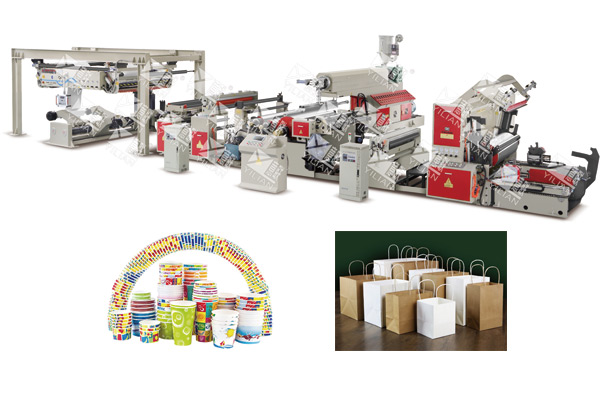
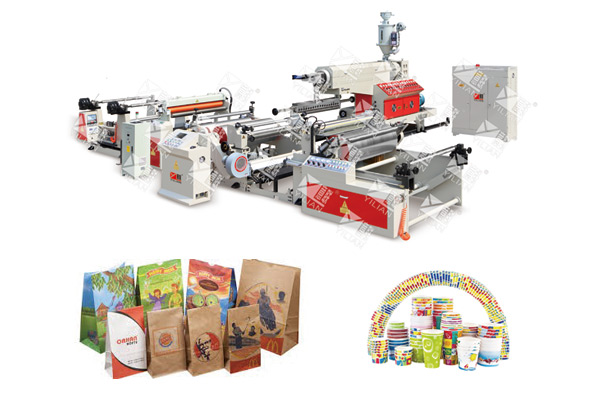
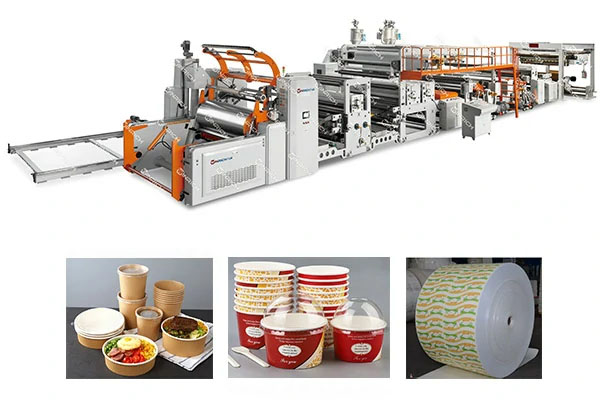
The WSFM1100-2000B is a double-side extrusion laminating machine. The paper unwinds from the main shaftless stand, passes the first extrusion die where one side receives its molten resin layer, goes through a cooling and nipping stage, then continues to the second extrusion station for the opposite side. After the second coating is applied and cooled, the finished web is rewound.
The two stations share the same web path, so the paper is never rewound and re-fed between sides. That single-pass sequence eliminates the handling step, the storage buffer, and the risk of surface damage that a second loading cycle would introduce.
What the Two-Sided Coating Delivers
Coating both sides lets one paper substrate serve two functions. On a paper cup, the inside coating provides the liquid barrier while the outside coating provides the print surface or the heat-seal layer for the side seam. On a food container, the inside coating handles grease resistance while the outside coating handles moisture and scuff protection. The WSFM1100-2000B applies PLA, PBS, LDPE, PP, EVA, or EAA to paper, aluminum foil, BOPP, BOPET, BOPA, CPP, or CPE substrates, covering the material combinations used in cup, tray, and food packaging production.
What Does the Shaftless Unwinding System Change?
No Shaft Handling, Automatic Splicing
The machine uses a shaftless unwinder with an automatic splicing system. Instead of threading a heavy shaft through the parent roll core, the roll sits on the unwind arms and the hydraulic system positions it against the web path. That design removes the shaft-lifting step and the risk of shaft misalignment that can damage the roll edge.
The automatic splicing system keeps the line running when one roll runs out. The new roll is prepared and spliced without stopping the coating process, which matters when the line is running at up to 300m/min and every stop creates waste.
Large Roll Diameters and Reduced Change Frequency
The main unwinding diameter is Φ1600mm, and the rewinding diameter is Φ1700mm. Those large roll capacities reduce the frequency of roll changes. A line that can run a larger parent roll spends less time on splicing and more time on coating. The auxiliary unwinding diameter is Φ600mm, which supports the splicing roll or a secondary material feed.
| Parameter | WSFM1100-2000B Specification |
|---|---|
| Machinery specification | 1100/90mm, 1300/100mm, 1500/105mm, 1800/110mm |
| Coating speed | Up to 300m/min |
| Coating resins | PLA, PBS, LDPE, PP, EVA, EAA |
| Base materials | Paper, AL, BOPP, BOPET, BOPA, CPP, CPE |
| Coating width | 1000mm, 1200mm, 1400mm, 1700mm |
| Coating thickness | 0.012–0.1mm |
| Coating thickness tolerance | ≤±5% |
| Cooling roller | Φ800mm |
| Screw L/D | Φ90:33, Φ100:33, Φ105:33, Φ110:33 |
| Main unwinding diameter | Φ1600mm |
| Auxiliary unwinding diameter | Φ600mm |
| Rewinding diameter | Φ1700mm |
What Keeps the Coating Uniform on Both Sides?
Hydraulic Compounding and the Imported Die Head
The hydraulic compounding system presses the molten resin against the substrate with controlled pressure across the web width. That even pressure is what produces a uniform coating thickness and a consistent bond on each side. The coating thickness tolerance is ≤±5%, which means a 20-micron target stays within 1 micron across the roll.
The die head is a high-precision imported unit. The die lip geometry determines how the molten curtain meets the substrate, and a high-precision die holds that geometry stable across the full coating width. The Φ800mm cooling roller then sets the coating before the web moves to the next station.
High-Speed Mixing and Automatic Screen Exchange
The machine uses high-speed and efficient mixing equipment based on Italian technology. The mixing quality affects the melt homogeneity, which in turn affects the coating uniformity. An inconsistent melt produces streaks or thickness variation that the die head cannot correct.
The automatic hydraulic filter screen exchange system changes the screen without stopping the extruder. A clogged screen raises the pressure and reduces the melt flow; the automatic exchange keeps the flow stable and removes the manual screen-change step from the production routine.
Where Does a Double-Side Line Fit in Paper Packaging?
Paper Cups, Bowls, and Food Containers
The WSFM1100-2000B is used in paper cups, paper bowls, ice cream cups, instant noodle bowl lids, paper bags, and fast food paper containers. Those products share a need for a coated surface on both sides: the inside for liquid or grease resistance, the outside for print or heat sealing.
A WSFM Shaftless Automatic Extrusion Coating Machine like the WSFM1100-2000B from Winrich runs the double-side process with a PLC man-machine interface and an integrated mechanical-electrical-pneumatic design. The line is described as a green model because the process uses no chemical solvents, which aligns with the shift toward solvent-free coating in food packaging.
What Should You Check Before Selecting a Double-Side Line?
How do I match the coating width to my paper stock?
The coating width options are 1000mm, 1200mm, 1400mm, and 1700mm. Match the width to your widest paper roll and the cup or container blank layout. If your production mix includes multiple widths, the machine's coating width is fixed by the die, so the selection should cover the majority of your jobs rather than the occasional outlier.
What resins work on this machine?
The line runs PLA, PBS, LDPE, PP, EVA, and EAA. PLA and PBS are bio-based resins for compostable packaging. LDPE is the standard polyolefin for liquid barrier and heat seal. PP offers higher temperature resistance. EVA and EAA provide adhesion to aluminum foil and other difficult substrates. The resin choice depends on the product's barrier, seal, and sustainability requirements.
What substrate range does the machine accept?
The base materials include paper, aluminum foil, BOPP, BOPET, BOPA, CPP, and CPE. Paper is the primary substrate for cup and container production. Aluminum foil is used in liquid packaging laminates. The plastic films support flexible packaging applications. Each substrate has different heat sensitivity and adhesion behavior, so the machine settings change when you switch materials.
What maintenance does the double-side line need?
Clean both die lips regularly to prevent carbon buildup that causes streaks. Check the cooling rollers for surface damage, and verify the hydraulic compounding pressure on both stations. Inspect the automatic screen exchange system for smooth operation, and clean the shaftless unwind arms and splicing mechanism. The PLC control system stores parameters for different jobs, but the mechanical components on both coating stations still need routine inspection.
Straight Answers on Double-Side Coating
Can the line run single-side coating if needed?
Yes. The second station can be bypassed or left idle, and the machine operates as a single-side line. That flexibility means the same line covers both single-side and double-side production without a second machine. The WSFM1100-2000C is the dedicated single-side model in the same series, but the B model can run single-side jobs when the second station is not required.
Why is the coating thickness tolerance important?
The ±5% tolerance determines how much resin you consume and how consistent the barrier performance is across the roll. A coating that runs thick wastes material; one that runs thin leaves weak spots in the barrier. The tolerance is a function of the die precision, the compounding pressure, and the line speed stability. If the tolerance drifts, check the die lip and the screen pressure before adjusting the process parameters.
What does the automatic splicing system do?
The splicing system joins the end of one parent roll to the beginning of the next without stopping the line. At 300m/min, a manual splice would require a stop and a re-thread, creating waste and lost production time. The automatic system prepares the splice while the line runs and executes it at the right moment, keeping the coating process continuous.
What's the difference between the B and C models?
The WSFM1100-2000B is the double-side machine; the WSFM1100-2000C is the single-side machine. The B model has two extrusion stations and applies coating to both sides in one pass. The C model has one station and applies coating to one side. The choice depends on whether your product requires two-sided coating or one-sided coating.
Let's Match a Double-Side Coater to Your Packaging Line
Share Your Paper Width and Resin Requirements
A WSFM Shaftless Automatic Extrusion Coating Machine in the double-side configuration should match your paper width, resin type, and coating thickness target — not the other way around. The WSFM1100-2000B from Winrich applies coating to both sides in one pass at up to 300m/min, handles widths from 1000mm to 1700mm, and runs PLA, PBS, LDPE, PP, EVA, and EAA on paper, foil, and film substrates with a ≤±5% thickness tolerance. The shaftless unwinder, automatic splicing, hydraulic compounding, and PLC control keep the two-sided process continuous and uniform. If you're specifying a double-side line for paper cups, food containers, or flexible packaging, send us your paper width and resin requirements — we'll help you confirm the right configuration before you order.