What Is Extrusion Coating Lamination and Why It Matters for Packaging
Datetime: 5/23/2026 10:42:00 AM Visit: 4
Let’s be honest: packaging engineers have plenty of ways to glue layers together. Solvent-based lamination, solventless adhesives, hot melt, wax coating—the list goes on. But each comes with trade-offs. Solvents need explosion-proof ventilation and lengthy drying ovens. Adhesives require precise mixing and can suffer from inconsistent cure times. So when someone says there’s a method that melts solid resin and presses it directly onto a moving web—no liquid glue, no drying tunnel, no waiting—you pay attention.
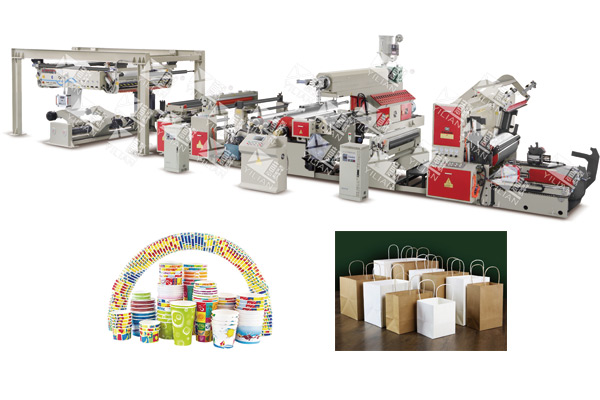
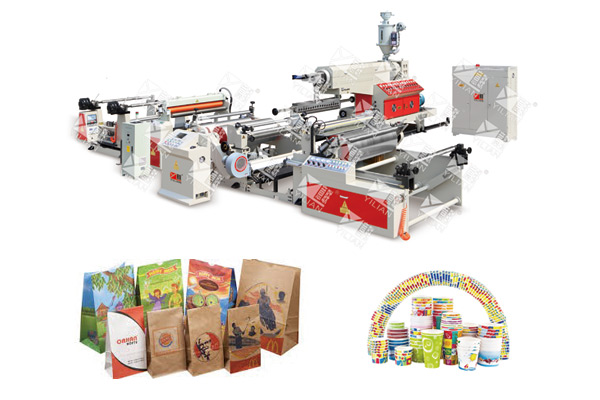
That method is extrusion coating lamination. You take plastic pellets (LDPE, PP, or even PLA), melt them into a hot curtain, and drop that curtain onto a substrate like paper, board, aluminum foil, or another film. Immediately after contact, a chilled roller solidifies the plastic, locking the layers together. The whole process takes milliseconds. And the machine that does it is called an extrusion coating lamination machine.
Why does this matter for your packaging operation? Because it solves three headaches at once: solvent handling compliance, barrier inconsistency, and production line footprint. In this article, we’ll walk through exactly how the process works, what kinds of products rely on it every day, and where it makes financial sense to bring it in-house.
Melting Pellets into a Curtain – No Glue Required
You can think of extrusion coating as a high-precision hot glue gun that never runs out of glue. But instead of a handheld tool, you have a heated barrel, a rotating screw, and a flat die that stretches the molten polymer into an even sheet.
Here’s the step-by-step:
-
Resin feeding: Plastic pellets are gravity-fed from a hopper into a screw conveyor.
-
Melting: The screw turns, pushing the material forward through heated zones. Temperatures range from 280°C to 320°C depending on the resin.
-
Die extrusion: Melted polymer exits through a flat die with an adjustable lip. The gap determines the coating thickness, typically 5 to 50 microns.
-
Substrate unwind: Meanwhile, your base material (paper, foil, or film) unwinds from a roll and travels toward the nip rollers.
-
Nip and chill: The molten curtain falls onto the moving substrate exactly between a pressure roller and a chilled drum. The drum quickly pulls heat away, solidifying the plastic into a solid layer.
-
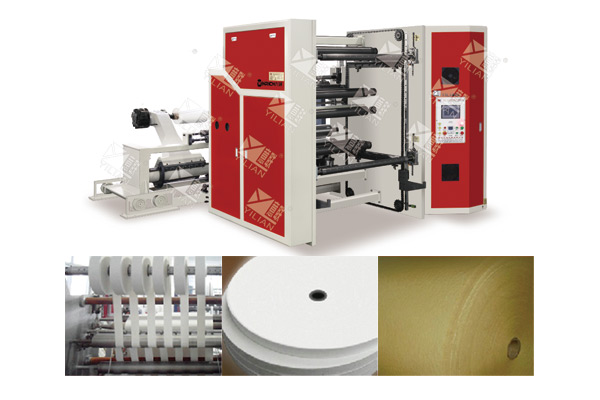
Rewind: The newly formed composite rolls up onto a finished core, ready for slitting or further conversion.
[Image: close-up of molten polymer curtain contacting a moving paper web at the nip point of an extrusion coating lamination machine]
That’s it. No drying ovens stretching 20 meters. No solvent recovery systems. No waiting 24 hours for full bond strength.
From Milk Cartons to Coffee Cups – You See It Every Day
You probably handle products made with this process every week without realizing it. Extrusion coating lamination is the hidden workhorse behind:
-
Aseptic liquid cartons (milk, juice, broth) – a layer of LDPE bonds paperboard to aluminum foil and provides a heat-sealable inner surface.
-
Paper coffee cups – the thin plastic lining that prevents your cup from turning into soggy cardboard.
-
Medical sterilization pouches – where a breathable film laminates to a transparent polyester layer, allowing steam or ethylene oxide to penetrate while keeping contaminants out.
-
Sachets for ketchup, shampoo, or instant coffee – multiple layers of different materials (PET, foil, PE) give barrier and puncture resistance.
-
Industrial wraps – reinforced tarpaulins or protective sheeting where fabric bonds to polyethylene.
In every case, the common thread is speed and reliability. You don’t want adhesive residue leaching into food. You don’t want delamination during forming or filling. Extrusion coating delivers a bond that is both chemically clean and mechanically robust.
Solvent‑Free vs. Glue‑Based – A Side‑by‑Side Look
Let’s put the options side by side. The table below compares extrusion coating lamination with solvent-based and solventless adhesive lamination across the factors that matter most on a production floor.
| Feature | Extrusion Coating | Solvent-Based Lamination | Solventless Adhesive |
|---|---|---|---|
| Bonding agent | Molten polymer (no solvents) | Liquid adhesive with organic solvents | Reactive liquid adhesive (no solvents) |
| Drying/curing | None – chill roller solidifies instantly | Requires long drying oven (15–30m) | Room-temperature cure (hours to days) |
| Solvent handling | None | Explosion-proof equipment, emission controls | None |
| Typical line speed | Up to 300 m/min | 100–200 m/min | 150–250 m/min |
| Residual chemicals | None (food-contact approved resins) | Potential solvent residue | Possible unreacted monomer |
| Barrier properties | Excellent (inherent polymer barrier) | Depends on adhesive and substrate | Good but limited by adhesive |
| Changeover time | Moderate (die cleaning) | Long (drying oven purge) | Short (mixer cleaning) |
| Initial equipment cost | High (extruder, die, chill roll) | Medium–High (oven, solvent recovery) | Medium |
What stands out? Extrusion coating eliminates entire process sections. You don’t need an oven. You don’t need solvent storage. You don’t need to wait for cure. If your priority is running food-contact materials without regulatory headaches, that’s a powerful argument.
When Owning Your Own Line Starts Paying Off
Outsourcing lamination is perfectly fine for small volumes or occasional specialty runs. But once you hit certain thresholds, owning an extrusion coating lamination machine changes your economics. Consider these scenarios: you run more than 500 tons of coated material per year (the markup from toll laminators starts to exceed the depreciation and operating cost of your own line); you develop proprietary barrier structures (protecting your formulation becomes difficult when a converter runs your job alongside competitors’); lead times are killing your just-in-time schedule (a dedicated line means you coat on demand, not when the laminator has open capacity); you want to experiment with new resins – bio‑based polymers, recycled‑content PE, or high‑heat‑resistant polypropylene (toll houses stick to standard recipes). None of this means extrusion coating is the only answer. For ultra‑thin films or low‑melt‑temperature substrates, adhesive lamination may still win. But for paperboard, aluminum foil, and most flexible packaging structures from 12µm to 400gsm, extrusion coating holds its own.
Three Technical Details That Separate Good Machines from Great Ones
Not all equipment performs the same. When you start evaluating suppliers, pay attention to three specific areas:
Die design – An adjustable die lip with uniform heating across the width prevents “neck-in” (edges thinning out). Look for automatic die bolt control if you run multiple resin types.
Chill roll surface finish and temperature control – The roll’s texture transfers directly to the coating. A mirror finish gives gloss; a matte finish reduces blocking. Water circulation must hold temperature within ±1°C across the roll face.
Unwind and tension control – Substrates like thin foil or stretchy film demand low-tension, closed-loop systems. If tension spikes, you get wrinkles or broken webs.
A Closer Look at the GSFM 360 from Winrich
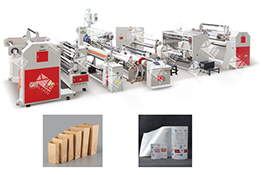
If you’ve been searching for a machine that balances capability with a reasonable footprint, the GSFM 360 Turn Over Automatic Extrusion Lamination Machine from Winrich is worth a close look. It’s designed for manufacturers who need consistent coating weight, fast job changeovers, and the ability to run both paper and film substrates without rebuilding the line every time.
What stands out about the GSFM 360? The “turn over” automatic system simplifies roll handling – you spend less time manually loading and unloading, which cuts downtime between runs. The extrusion unit accommodates standard LDPE as well as higher-temperature resins like EVA and PP. And the control interface gives you real-time readouts of coating thickness, line speed, and nip pressure, so your operators aren’t guessing.
Winrich has been building converting equipment for over a decade, and their support model includes on-site commissioning and operator training. That matters because extrusion coating isn’t a “set it and forget it” technology – die gap adjustments, chill roll temperature profiles, and resin melt indexes all interact. A supplier that walks you through the first hundred runs is worth more than a discount on the price tag.
Questions Production Teams Ask Most Often
Q: Can I run biodegradable resins like PLA on an extrusion coating machine?
A: Yes, but you’ll need a modified die and chill roll setup. PLA has a narrower processing window than LDPE. The GSFM 360 handles PLA with optional temperature zoning and screw geometry adjustments.
Q: What thickness range is typical for the coating layer?
A: From 5 microns (for light heat-seal coatings) up to 50 microns for heavy-duty barrier layers. Thicker coatings slow the line because the chill roll must remove more heat.
Q: Do I need corona treatment?
A: For non-polar substrates like untreated PP or PE films, yes. Corona increases surface energy so the molten resin wets out properly. Many machines include a corona treater just before the nip.
Q: How long does a die cleaning take?
A: About 30 minutes if you have a purging compound and the die is accessible. Some operators run a low-melt-index purge resin through at shutdown to prevent carbonization.
Putting This Information to Work on Your Floor
By now you should have a clear picture: extrusion coating lamination trades a higher upfront machine cost for lower per-unit operating expense, faster turnaround, and cleaner compliance. It’s not the answer for every package, but for anything that touches food, beverages, or medical products – where solvent residues are unacceptable – it’s often the best fit.
If you’re currently laminating with adhesives and spending too much time on solvent paperwork or waiting for cure, request a material test. Send your current rolls to a toll coater or direct to a machinery supplier like Winrich. Run a few hundred meters on their lab line. Measure bond strength, seal initiation temperature, and visual appearance. Then you’ll know whether extrusion coating belongs on your floor.
【Request a quote from Winrich for the GSFM 360 Turn Over Automatic Extrusion Lamination Machine】
Provide your substrate types, desired coating weight, and average monthly tonnage. Their technical team will respond with line layout recommendations and a trial plan.