Can an Extrusion Coating Lamination Machine Replace Solvent-Based Processes?
Datetime: 8/6/2026 2:07:00 PM Visit: 282
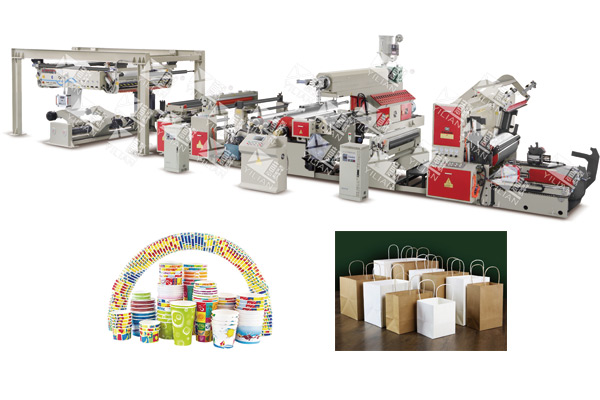
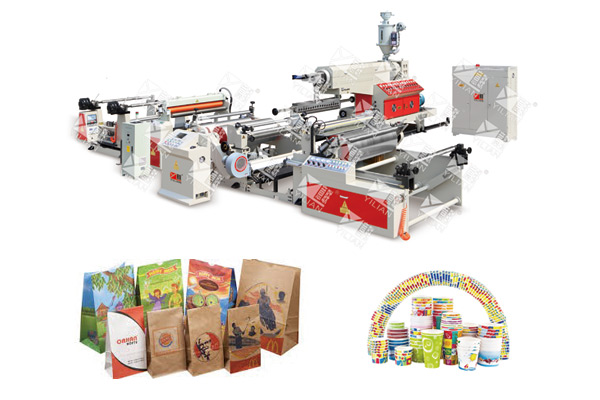
You're running a flexible packaging operation—producing paper cups, food wrappers, or aseptic cartons. The coating process is the bottleneck: solvents, drying ovens, emissions controls, and long cure times. An extrusion coating lamination machine offers a fundamentally cleaner, faster alternative. Instead of solvent-based adhesives that require drying, it melts polymer resin (PE, PLA, PP, EVA, or PBS) and extrudes it directly onto the substrate in a single pass. The WSFM1100-2000C is a single-side full automatic high-speed extrusion laminating machine designed for this process—reaching speeds up to 300m/min, coating widths from 1100mm to 1800mm, and film thickness down to 0.012mm. This guide covers how the machine works, its key specifications, substrate and resin compatibility, and what to look for when selecting an extrusion coating line.
From Resin to Finished Composite – One Continuous, Solvent-Free Process
The principle is straightforward. Polymer resin pellets—PE, PLA, PP, EVA, or PBS—are fed into an extruder, where they are melted and homogenized. The molten polymer is then forced through a flat die, forming a thin, continuous film that is stretched and immediately pressed onto the moving substrate. The composite passes through a cooled roller, which solidifies the coating and bonds it to the substrate. The entire process—from resin to finished roll—is continuous and solvent-free, with no drying ovens, no VOC emissions, and no lengthy cure times. The result is a waterproof, oil-proof, and heat-sealable substrate ready for downstream converting.
The Role of the Extruder and Flat Die
The extruder melts and homogenizes the resin, ensuring consistent melt temperature and pressure. The flat die distributes the molten polymer evenly across the full width of the substrate, producing a uniform film thickness. The WSFM series uses high-precision imported original dies to maintain composite quality and production efficiency.
Cooling and Bonding – The Composite Roll
The cooled roller—available in Φ500mm, Φ600mm, and Φ700mm options—solidifies the molten polymer and bonds it to the substrate. The result is a permanent, durable bond that requires no additional adhesives or curing time.
The Numbers That Define Production Capacity – Speed, Width, and Film Thickness
The WSFM1100-2000C is available in four mechanical specifications—1100/90mm, 1300/100mm, 1500/105mm, and 1800/110mm—with coating film speeds of 150m/min, 180m/min, and 200m/min. Coating thickness ranges from 0.012mm to 0.1mm with net film thickness error of ≤±5%.
Speed and Coating Width
At speeds up to 200m/min (with options reaching 300m/min on some configurations), the machine delivers high-volume output for demanding production schedules. Coating widths of 1100mm, 1300mm, 1500mm, and 1800mm accommodate a wide range of substrate sizes.
Thickness Precision
The ≤±5% thickness error ensures consistent coating weight across the entire width of the web. This precision is critical for applications where coating thickness affects product performance—barrier properties, heat sealability, and material cost.
From Paper to Aluminum Foil – A Single Machine That Handles Them All
The WSFM series supports a wide range of substrates and resins, making it a versatile solution for diverse packaging applications.
Substrate Compatibility
The machine handles BOPP, BOPET, BOPA, CPP, CPE, paper, and aluminum foil. This versatility allows you to run different substrate types on the same equipment, reducing the need for multiple dedicated lines.
Resin Compatibility
Applicable coating resins include LDPE, PP, EVA, EAA, PLA, and PBS. The ability to process both conventional and biodegradable resins makes the machine suitable for both traditional and sustainable packaging applications. With growing demand for PLA- and PBS-coated paper in food service packaging, the WSFM series is positioned to meet this market shift.
Built for Continuous Operation – Features That Keep the Line Running
The WSFM1100-2000C is designed for reliability and ease of operation in high-volume production environments.
PLC Human-Machine Interface
The PLC human-machine interface provides centralized control of machine, electrical, and pneumatic systems. This simplifies operation, reduces setup time, and enables precise parameter adjustment.
Shaftless Unwinder and Auto Splicing
The shaftless unwinder with automatic splicing system enables continuous operation—roll changes happen without stopping the line. This minimizes downtime and maximizes throughput, particularly valuable for long production runs.
Hydraulic Compounding System
The hydraulic compounding system ensures even coating distribution and high peel strength. The automatic hydraulic filter replacement system maintains consistent performance without manual intervention.
Quick Change Mechanism and Multi-Extruder Options
The machine can be equipped with single, double, or multi-extruder configurations. The quick change mechanism reduces changeover time between jobs, improving overall equipment effectiveness.
From Paper Cups to Aseptic Packaging – Where This Machine Shines
Extrusion coating lamination is used across a wide range of packaging applications where barrier properties, heat sealability, and printability are required.
-
Paper cups and bowls: PE-coated paper provides moisture barrier and heat sealability
-
Food wrappers and fast food boxes: Oil and grease resistance for direct food contact
-
Aseptic packaging: Paper-aluminum-polyethylene laminates for milk and beverage cartons
-
Medical packaging: Sterile barrier packaging requiring consistent coating thickness
-
Industrial and agricultural packaging: Heavy-duty sacks, cement bags, and ground cover film
6 Questions Production Managers Ask Before Investing in a Coating Line
What is the maximum coating speed?
The WSFM1100-2000C achieves coating speeds of 150m/min, 180m/min, and 200m/min, depending on the configuration.
What coating widths are available?
The machine is available in four widths: 1100mm, 1300mm, 1500mm, and 1800mm.
What is the coating thickness range and tolerance?
Coating thickness ranges from 0.012mm to 0.1mm with net film thickness error of ≤±5%.
What substrates can the machine handle?
The machine handles BOPP, BOPET, BOPA, CPP, CPE, paper, and aluminum foil.
What resins are supported?
Applicable resins include LDPE, PP, EVA, EAA, PLA, and PBS.
How does the machine handle roll changes without stopping?
The shaftless unwinder with automatic splicing system enables continuous operation—roll changes happen without stopping the line.
Let's Find a Coating System That Fits Your Substrates and Volume Targets
Selecting an extrusion coating lamination machine comes down to three factors: coating width (match your substrate size), speed (match your volume), and resin compatibility (match your material requirements). Contact Winrich Machinery for a customized quote → —their team can help you select the right WSFM1100-2000C configuration for your specific coating and laminating needs.
Winrich Machinery manufactures extrusion coating and laminating equipment for the flexible packaging industry. The WSFM1100-2000C Single Side Full Automatic High Speed Extrusion Laminating Machine features PLC human-machine interface control, shaftless unwinder with automatic splicing, hydraulic compounding system, and high-precision imported dies. It achieves speeds of 150-200m/min with coating widths of 1100mm to 1800mm and thickness from 0.012mm to 0.1mm. The machine handles substrates including BOPP, BOPET, BOPA, CPP, CPE, paper, and aluminum foil, with resins including LDPE, PP, EVA, EAA, PLA, and PBS. Applications include paper cups, paper bowls, food wrappers, aseptic packaging, and industrial packaging. Winrich Machinery provides comprehensive technical support, installation guidance, and after-sales service. Connect with Winrich Machinery to discuss your coating width requirements, production volume targets, and material specifications.