Can Extrusion Coating Lamination Machine Run Without Edge Trim?
Datetime: 10/28/2026 10:58:00 AM Visit: 8
Yes—when the die head is designed to lay the molten curtain precisely to the substrate edge. A conventional extrusion coater leaves a selvage of coated material on each side that has to be trimmed away and discarded. An Extrusion Coating Lamination Machine fitted with a high-precision, non-edge imported die head eliminates that trim allowance, laying the coating to the usable width so the full roll becomes saleable product. This article explains how the non-edge die head works, what the static mixing system contributes to edge-to-center uniformity, and what to verify when you’re matching a trim-free line to your packaging production.
How Does a Non-Edge Die Head Eliminate Trim Waste?
The Trim Allowance Problem
In a standard extrusion coating setup, the molten curtain is laid slightly wider than the target coating width. The extra width is a safety margin: it accounts for slight web wander, die lip tolerances, and the thickening that occurs at the curtain edge. That margin becomes a trim strip—coated material that must be slit off and discarded before the roll can be used.
The trim strip is not just wasted resin. It is wasted substrate, wasted coating weight, and wasted line time at the slitting station. On a line running 200 m/min, a 20mm trim on each side of a 1500mm web represents a continuous material loss that accumulates across every shift.
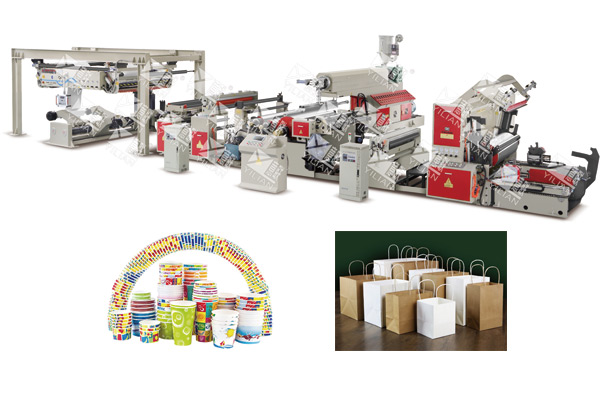
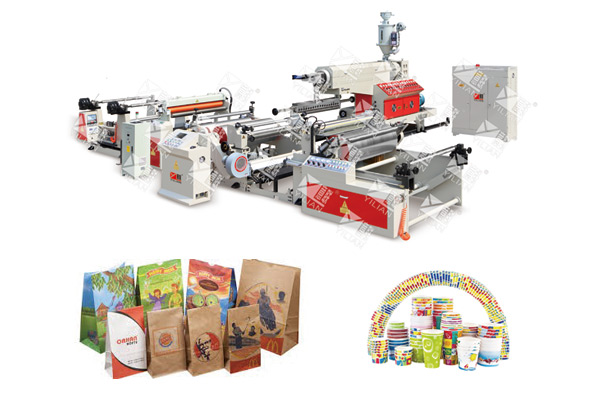
The GSFM 1100–2000 uses a high-precision, non-edge imported original die head. The die lip geometry and the internal flow channels are engineered to deliver a uniform curtain right to the edge of the usable width, so the coating lands where the product needs it without the selvage. The operator sets the coating width to the finished dimension, and the trim station—if present at all—handles only the occasional edge defect rather than a continuous strip.
What “Non-Edge” Actually Requires
Eliminating trim puts more demand on the die head and the melt delivery system. If the melt pressure varies across the die width, the coating will be thicker at one edge than the other, and a trim-free setup will produce a roll with a thickness gradient that fails downstream converting.
That’s why the non-edge die head is paired with a static mixing device and a high-efficiency mixing screw. The mixing screw homogenizes the polymer before it reaches the die, and the static mixer removes the last temperature and viscosity variations across the flow path. The die head then receives a melt stream that is uniform in pressure and temperature, which is the prerequisite for laying a consistent coating edge-to-edge.
| Parameter | GSFM-1100 | GSFM-1300 | GSFM-1500 | GSFM-1800 |
|---|---|---|---|---|
| Max. coating width | 1100mm | 1300mm | 1500mm | 1800mm |
| Max. line speed | 150 m/min | 180 m/min | 200 m/min | 200 m/min |
| Coating thickness | 0.012–0.1mm | Same | Same | Same |
| Thickness tolerance | ≤±5% | Same | Same | Same |
| Screw diameter | Φ90mm | Φ100mm | Φ105mm | Φ110mm |
| Screw L/D | 33:1 | 33:1 | 33:1 | 33:1 |
| Die head | Non-edge, imported | Same | Same | Same |
| Main unwind diameter | Φ800–1500mm | Same | Same | Same |
| Rewind diameter | Φ800–1700mm | Same | Same | Same |

What Does the Static Mixer Contribute to Edge Uniformity?
Removing the Last Temperature Streaks
The high-efficiency mixing screw delivers a largely homogeneous melt, but some temperature stratification remains after the screw. The polymer closest to the barrel wall runs hotter than the polymer in the center of the channel. When that stratified melt reaches the die, the hotter polymer flows more readily, and the coating ends up thinner on one side of the die than the other.
The new technology static mixing device (Italian technology) sits between the screw and the die head. It divides and recombines the melt flow repeatedly, without moving parts, so the temperature and viscosity differences are averaged out before the polymer reaches the die lip. The result is a melt stream that is uniform across the full coating width, which is what allows the non-edge die head to lay a consistent layer from one edge to the other.
What the ±5% Tolerance Means at the Edge
The coating thickness tolerance is ≤±5% across the full width. On a 0.05mm target coating, that means the thickness stays between 0.0475mm and 0.0525mm from edge to center. Without the static mixer, the edge regions would drift outside that window even if the center held tolerance.
For a converter running barrier packaging, the edge thickness matters as much as the center. A thin edge creates a weak seal zone; a thick edge wastes resin and can cause winding problems. The static mixer is the component that keeps the non-edge die head honest across the full web.
How Does the PLC Manage a Trim-Free Run?
Centralized Parameter Control
The GSFM uses PLC human-machine interface centralized control with integrated machine, electrical, and pneumatic design. The operator sets the extruder temperature, screw speed, line speed, nip pressure, and tension through a single interface, and the system holds those parameters across the run.
A trim-free line is sensitive to line speed variation. If the line speed drifts, the coating weight changes, and the edge that was running clean can start to thicken or thin. The PLC closes that loop, adjusting the screw speed and the line speed together so the coating weight stays on target. The centralized design also simplifies troubleshooting: the fault diagnosis function points to the specific parameter that drifted, rather than requiring the operator to check each control panel separately.
Quick Screen Changer Without Stopping
A screen pack clogged with degraded polymer raises the melt pressure and distorts the flow across the die. On a conventional line, the operator stops production to change the screen. The GSFM includes a quick screen changer that replaces the screen without stopping the line.
That capability matters for a trim-free run because a pressure spike from a clogged screen will show up first at the die edges. The quick changer lets the operator swap the screen in seconds, before the pressure distortion reaches the coating and forces a trim adjustment.
What Substrates and Resins Work on a Trim-Free Line?
The GSFM series handles paper, non-woven fabric, pure aluminum foil, metallized film, BOPP/PET, and other substrates. The coating resins include LDPE, PP, EVA, and EAA, with PLA and PBS available for bio-based applications.
The trim-free approach is most valuable on substrates where the coated edge is a finished edge—food packaging, hygiene products, and aseptic carton stock. On those products, a trimmed edge is a visible line that can affect seal integrity and appearance. A non-edge coating delivers a clean, fully coated edge without a secondary slitting step.
A Extrusion Coating Lamination Machine with a non-edge die head like the GSFM 1100–2000 from Winrich combines the imported die, the static mixer, and the PLC control into a platform that runs trim-free across 1100mm to 1800mm widths at 150–200 m/min.
What Should You Check Before Specifying a Trim-Free Line?
How do I verify edge thickness on a sample?
Run a sample at production speed and measure the coating thickness at the center, the quarter points, and within 10mm of each edge. The non-edge die head should hold the same thickness at the edge as at the center, within the ±5% tolerance. If the edge reads thin, the die lip or the static mixer needs adjustment before the line is accepted.
What die head maintenance does a non-edge design need?
The die lip is the critical surface. Inspect it for polymer buildup or carbonized deposits during scheduled maintenance. A contaminated lip will distort the curtain at the edge first, because the edge has the least margin for flow variation. Clean the lip according to the manufacturer’s procedure, and avoid abrasive tools that could round the precision edge.
Does trim-free operation eliminate the slitting station entirely?
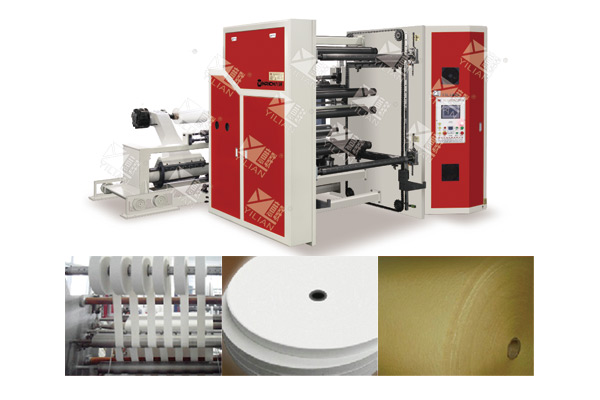
Not necessarily. Some lines retain a slitting station for edge defect removal or for splitting a wide web into narrower finished rolls. The difference is that the slitter no longer runs continuously to remove a trim strip; it operates only when the product specification requires a slit. Confirm the slitting configuration against your finished roll width and edge quality requirements.
What line speed can I run without losing edge quality?
The coating speed range is 150–200 m/min depending on the model. The non-edge die and the static mixer hold the edge quality across that range, but the practical ceiling depends on the resin and the coating weight. Lighter coatings can run toward the top of the range; heavier coatings may need to run slower to maintain the edge tolerance.
Straight Answers on Non-Edge Extrusion Coating
What does “non-edge” actually mean on a die head?
“Non-edge” means the die is designed to lay the coating to the usable edge of the substrate without requiring a trim allowance. The internal flow channels and the lip geometry deliver a uniform curtain across the full width, so the coated product does not need a selvage trimmed away.
Why is a static mixer necessary for trim-free operation?
Without a static mixer, the melt reaching the die has temperature and viscosity variations that cause the coating thickness to vary across the width. A trim allowance hides that variation by discarding the edges. A trim-free die head exposes it. The static mixer removes the variation so the edge thickness matches the center.
Can the line run aluminum foil without edge trim?
Yes, when the tension and cooling are set for foil. Aluminum foil is thinner and more prone to creasing than paper, so the unwind tension and the cooling roller temperature need tighter control. The non-edge die head lays the coating to the foil edge, and the PLC holds the line speed and tension steady to prevent edge wandering.
What happens if the melt pressure drifts during a trim-free run?
Pressure drift shows up first at the die edges, because the edge has the least flow margin. The PLC fault diagnosis flags the pressure deviation, and the quick screen changer allows the operator to replace a clogged screen before the edge quality degrades. If pressure drift persists after a screen change, check the screw speed and the die temperature before adjusting the lip.
Let's Match a Trim-Free Coater to Your Product
Share Your Substrate, Coating Width, and Edge Requirement
An Extrusion Coating Lamination Machine with a non-edge die head should match your substrate, finished coating width, and edge quality requirement—not the other way around. The GSFM 1100–2000 from Winrich delivers 1100–1800mm coating widths at 150–200 m/min, with a high-precision non-edge imported die head, a static mixing device for edge-to-center uniformity, ≤±5% thickness tolerance, and PLC centralized control with a quick screen changer. If you're running food packaging, hygiene stock, or aseptic carton material and want to eliminate the trim strip, send us your substrate, coating width, and edge requirement — we'll help you confirm the right model and die configuration before you order.