What Width Can a Paper Cutting Machine Actually Handle?
Datetime: 9/9/2026 3:44:00 PM Visit: 293
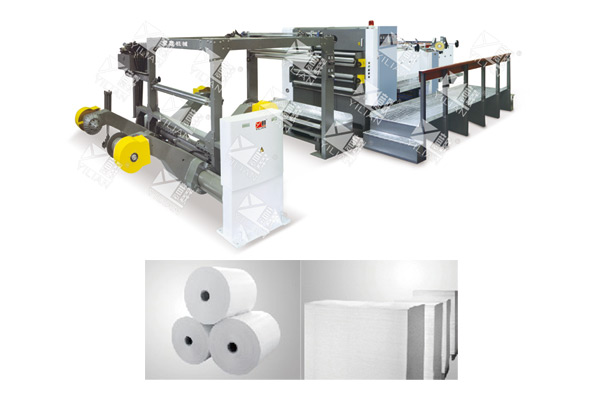
You're specifying a sheeting line, and the first question is always the same: how wide does it need to be? A paper cutting machine that's too narrow limits the jobs you can take. One that's wider than necessary costs more and takes up more floor space than you need. The GDJA-1400/1700 Hob Type Double Station Servo-driven Computer Paper Cutter offers two width options—1400mm and 1700mm—covering a wide range of paper and board applications. This article walks through what these width specifications actually mean for your production capability, how the machine maintains accuracy across the full web width at 300 meters per minute, and whether the 1400mm or 1700mm model is the right fit for your typical order mix.
First Questions About Web Width and Cutting Capacity
Two Practical Concerns—Answered Directly
Q: What's the actual difference between the 1400mm and 1700mm models?
A: The primary difference is the maximum cutting width—1400mm versus 1700mm. The 1700mm model also has a higher gross weight (15000kg vs. 13000kg) to accommodate the larger frame and wider cutting section.
Q: What paper widths can these machines actually process?
A: Both models cut paper within their respective maximum widths—up to 1400mm or 1700mm. The minimum cutting length is 450mm for both models, with a maximum cutting length of 1450mm.
The Width Argument — Why 1400mm or 1700mm?
Paper and board come in standard roll widths. European and Asian mills commonly produce rolls at 1000mm, 1200mm, 1400mm, and 1600mm. North American mills often work in inches, with 54" (1372mm) and 63" (1600mm) being common. The GDJA-1400 covers the 1400mm metric standard and most 54" applications. The GDJA-1700 covers the larger 1600-1700mm range—accommodating wider packaging board, larger printing formats, and the broader rolls increasingly used in high-volume converting.
What Width Actually Determines
The cutting width determines the maximum sheet size you can produce. If you run a 1400mm machine, you cannot produce sheets wider than 1400mm—period. If you run a 1700mm machine, you have the flexibility to process both narrower and wider rolls. The trade-off is that the wider machine costs more, weighs more (15000kg vs. 13000kg), and requires more floor space.
Matching Width to Your Order Mix
If the majority of your orders are under 1400mm, the narrower model may be the most cost-effective choice. If you regularly handle 1600mm packaging board or see a trend toward wider web materials, the 1700mm model provides the capacity to handle that growth. The machine's ability to run 2 sheets in slitting format also means that wider webs can produce multiple narrower sheets in a single pass.
Speed and Accuracy — Performance That Doesn't Depend on Width
One concern with wider machines is whether cutting accuracy suffers at the edges. The GDJA series maintains ±0.5mm cutting accuracy across the full web width—at 300 m/min or 300 cuts per minute—regardless of whether you're running the 1400mm or 1700mm model.
What 300 Cuts Per Minute Actually Delivers
At 300 cuts per minute, the machine produces 18,000 sheets per hour—or 36,000 sheets if running in 2-sheet slitting format. For converters running multiple shifts, the output translates to hundreds of thousands of sheets per day. The ±0.5mm accuracy ensures that those sheets are consistent, reducing waste in downstream printing, folding, or packaging operations.
How Accuracy Is Maintained Across the Web
The upper knife cuts reciprocally while the lower knife remains fixed. Imported precision bearings ensure that the knife maintains its alignment across the full width of the web. The AC servo drive provides precise control of the cut cycle, compensating for any tension variations that could affect cut length. The result is consistent accuracy from edge to edge, regardless of width.
Double-Station Design — Continuous Production
The double-station unwinding system is a key productivity feature that applies equally to both width models:
How It Works
The machine has two unwinding positions. While one roll is feeding paper into the cutter, the other station can be loaded with a fresh roll. When the active roll runs out, the machine switches to the prepared roll instantly—no stopping for roll changes. The maximum roll diameter of 1800mm (71") means each roll runs for a substantial period, and the double-station design ensures that production continues when the roll finally runs out.
The Productivity Impact
In a single-station machine, each roll change can take 5-10 minutes of downtime. On a machine running 300 cuts per minute, that downtime represents thousands of lost sheets. The double-station design eliminates this downtime entirely, adding significant capacity over the course of a shift, week, or year.
Technical Specifications — GDJA-1400 vs. GDJA-1700
| Parameter | GDJA-1400 | GDJA-1700 |
|---|---|---|
| Maximum Cutting Width | 1400mm | 1700mm |
| Cutting Length Range | 450-1450mm | 450-1450mm |
| Cutting Speed | 300 m/min (300 cuts/min) | 300 m/min (300 cuts/min) |
| Cutting Accuracy | ±0.5mm (length above 1300mm) | ±0.5mm (length above 1300mm) |
| Paper Weight Range | 50-500g | 50-500g |
| Cutting Method | Upper knife reciprocating, lower knife fixed | Upper knife reciprocating, lower knife fixed |
| Maximum Roll Diameter | 1800mm (71") | 1800mm (71") |
| Maximum Stack Height | 1300mm | 1300mm |
| Slitting Format | 2 sheets | 2 sheets |
| Air Compressor Requirement | Max. 5.5kg/cm² × 5m³/min | Max. 5.5kg/cm² × 5m³/min |
| Power Supply | AC380V/220V × 50Hz | AC380V/220V × 50Hz |
| Gross Weight | 13000kg | 15000kg |
Applications — Matching Width to Industry Needs
The choice between 1400mm and 1700mm depends on the application:
Commercial Printing
For commercial printers producing standard sheet sizes (A1, A2, etc.), the 1400mm width covers most requirements. European and Asian mills commonly supply rolls at 1400mm, making this a natural fit.
Packaging Board
Packaging converters handling carton board, folding box board, and solid board often require wider webs. The 1700mm model accommodates the larger formats common in packaging applications, particularly for folding cartons and corrugated box board.
Specialty Paper and Stationery
Stationery and specialty paper applications often use narrower webs—1000mm to 1200mm—but the ability to run 2 sheets in slitting format on a wider machine can double output. The 1400mm model running in 2-sheet mode can produce two 700mm sheets per cut, effectively doubling the production rate.
Labels and Coated Papers
For label stock and coated papers, consistent cutting accuracy is critical. Both models deliver the ±0.5mm accuracy needed for these applications, regardless of width.
Straight Answers About Paper Cutting Machine Width
Q: Is the 1700mm model worth the extra cost over the 1400mm?
A: It depends on your order mix. If you regularly run rolls wider than 1400mm, the 1700mm model is the only choice. If your orders are consistently under 1400mm, the 1400mm model provides a more cost-effective solution.
Q: Does the wider model cut slower?
A: No. Both models run at 300 m/min (300 cuts/min) with the same ±0.5mm accuracy. The speed and accuracy are identical—only the width differs.
Q: Can I run narrower rolls on the wider machine?
A: Yes. The 1700mm model can run any roll width up to its maximum. You're not forced to run only 1700mm rolls—the machine adapts to the width of the roll you load.
Q: What's the minimum cutting length?
A: Both models have a minimum cutting length of 450mm and a maximum of 1450mm.
Q: Does the machine handle paper and board?
A: Yes. The paper weight range is 50-500g, covering lightweight papers through heavy cardstock and packaging board.
Request a Paper Cutting Machine Configuration
A paper cutting machine with the right width for your production mix, double-station design for continuous operation, and AC servo drive for precision cutting is the practical choice for converters who need both flexibility and output. The GDJA-1400/1700 Hob Type Double Station Servo-driven Computer Paper Cutter delivers 1400mm or 1700mm maximum cutting width to match your roll sizes, 450-1450mm cutting length range with ±0.5mm accuracy, 300 m/min cutting speed for high-volume production, double-station unwinding for zero-downtime roll changes, AC servo drive with imported precision bearings and cutting knives, 50-500g paper weight range covering light to heavy stocks, 1800mm maximum roll diameter with 1300mm stack height, and 2-sheet slitting format to double your output.
Whether you're running a commercial printing operation, a paper converting facility, or a packaging production line, choosing the right width is the first step to efficient production. With two width options and robust construction backed by Taiwanese and British engineering technology, the GDJA series adapts to your specific production requirements.
Contact Winrich for a paper cutting machine configuration assessment → their team can help you select the right width, station configuration, and options for your specific paper grades, roll sizes, and production targets. Get a machine that handles the width you need—and the output you demand.