Which Width Do You Actually Need: 1400mm or 1700mm on a Paper Cutting Machine?
Datetime: 11/19/2026 11:39:00 AM Visit: 10
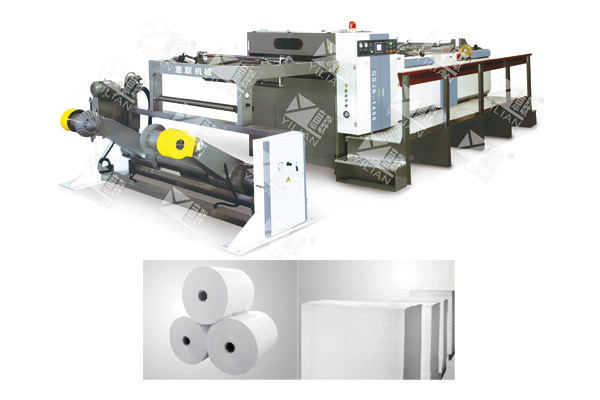
Two models share one design and differ by a single number: 1400mm or 1700mm of paper width. A Paper Cutting Machine in this range takes 60-550g stock off a 65-inch roll and cuts it at 300 cuts a minute. Here's what else changes when you move up a size.
What Those Two Numbers Actually Decide
How Wide Can the Roll Be?
1400mm (55") on the smaller model, 1700mm (67") on the larger, and both swallow a parent roll up to 1650mm (65") in diameter. That's the entire difference between the two: same knife arrangement, same drive, same cut range, and the width is the variable.
How Thick and How Heavy a Stock?
60-550g is the reference range, and it reaches both ends. Lightweight printing paper sits at the bottom; heavy board sits at the top. That spread is why the same frame turns up in a paper converting shop and in a printing house that wants to sheet its own stock rather than buy it cut.
How Long a Cut, and How Tight?
Cut length runs 450-1300mm, and accuracy is quoted in two bands: ±0.5mm below 1000mm, ±0.1% at 1000mm and above. The split matters, because at a 1300mm cut the second band allows roughly ±1.3mm — looser in absolute terms, and normal for a longer stroke.
A Moving Knife Against a Fixed Bed
Why the Knife Split Matters
The model name calls it a hob type, but the working parts are simple: the upper knife cuts reciprocally, the lower knife stays fixed. All the cutting force and all the timing live in the moving half, so precision bearings and a properly ground cutter are what keep the cut square sheet after sheet. That's the arrangement the page credits for its accuracy — not an elaborate control loop, but a rigid moving knife meeting a bed that doesn't move.
Two Speed Figures, One Drive
Strokes and Meters Are Different Numbers
300 cuts/min and 300m/min are both quoted, and they measure different things. The first counts strokes; the second counts meters of web passing through. An AC servo motor under computer control sets both, and the servo is what holds them steady as the parent roll shrinks and unwind tension shifts.
Which Figure Binds First
At a 450mm cut, 300 strokes a minute moves only about 135m of paper, so stroke count is the limit. At 1300mm, 300 strokes would mean 390m — past the 300m ceiling — so meter speed takes over and the stroke rate settles near 230. Short cuts chase strokes; long cuts chase meters, and knowing which one binds keeps a capacity promise honest.
Where the Anti-Bending Frame Sits
Flat Paper, Square Cut
Web that bows between the unwind and the knife cuts crooked, however good the knife is. The frame carries an anti-bending design that holds the sheet flat through the cut zone, and the control side is a touch-type computer interface — one screen for length, count, and speed instead of a panel of dials. The page calls it an economic machine, and that reads correctly: the money sits in the knife, the bearings, and the drive rather than in sheet-metal trim.
The Two Columns Side by Side
Seven Rows, Six of Them Identical
Same knife arrangement, same 60-550g stock, same 1650mm roll, same 450-1300mm cut, same 300 cuts and 300m, same two-band accuracy. Only the paper width row moves, and it moves by 300mm. That makes the comparison unusually clean — stepping up doesn't buy a better machine, it buys a wider one.
| Item | GDJB-1400 | GDJB-1700 |
|---|---|---|
| Cutting method | Reciprocating upper knife, fixed lower knife | Reciprocating upper knife, fixed lower knife |
| Reference paper weight | 60-550 g | 60-550 g |
| Max roll diameter | 1650 mm (65") | 1650 mm (65") |
| Max paper width | 1400 mm (55") | 1700 mm (67") |
| Cutting length | 450-1300 mm | 450-1300 mm |
| Cutting accuracy | ±0.5 mm below 1000 mm; ±0.1% at 1000 mm and above | ±0.5 mm below 1000 mm; ±0.1% at 1000 mm and above |
| Cutting speed | 300 cuts/min | 300 cuts/min |
| Meter speed | 300 m/min | 300 m/min |
Where the Tolerance Bends
The accuracy row has a change of rule at one meter, and it's the row most buyers skim past. Below 1000mm you get a flat ±0.5mm; above it, ±0.1% of the cut length. For a 450mm cut that's half a millimeter, for 1300mm it's about 1.3mm. Quote the band that matches your longest cut and the number stops being a surprise at the next machine downstream.
Where a 65-Inch Roll Sets the Ceiling
Roll Size and Cut Length Together
A 1650mm parent roll is a large one, and the job here is to turn it into flat sheets between 450mm and 1300mm long without the web wandering on the way through. Roll diameter decides how long you can run between changes; cut length decides how much of that roll becomes sellable sheet. Together they set the pace of the line, and both are on the same spec sheet for a reason.
Winrich, the Drive Chain, and the Enquiry
What the Servo Actually Does
Winrich Machinery builds the GDJB-1400/1700 hob type servo-driven computer paper cutter around an AC servo motor under computer control, with precision bearings and a ground cutter doing the work. The page describes the result as quick and stable rather than fast — the right way to size a machine that runs a full shift, because stability at 300 is worth more than a peak number you can't hold.
What to Send With the Enquiry
Four lines narrow the choice to one model:
- The widest roll you need to run, in millimeters.
- The stock weight range, in grams.
- Your shortest and longest cut length.
- Whether the stock arrives pre-printed, since that decides how much handling the web gets.
A Paper Cutting Machine order is a width decision plus a knife decision, and those four lines answer both.
Send the Roll Width and the Cut Range
What to Put in the Message
Put the roll width, the stock weight, and the cut range in the first message. Those three numbers either land inside the table or they don't, and there's no point discussing options before they do.
Send them through our request a quotation form and we'll come back with a Paper Cutting Machine in the width that fits your roll, rather than the width that happens to be on the floor.