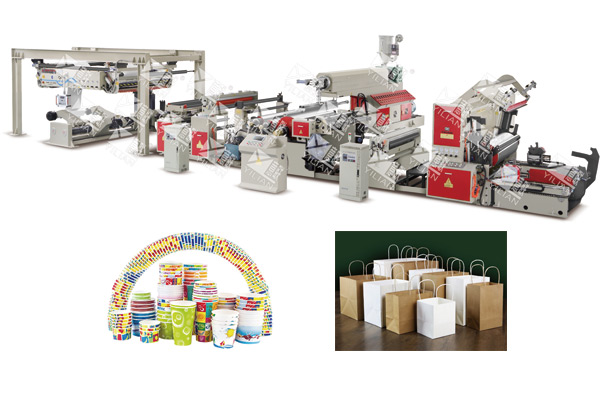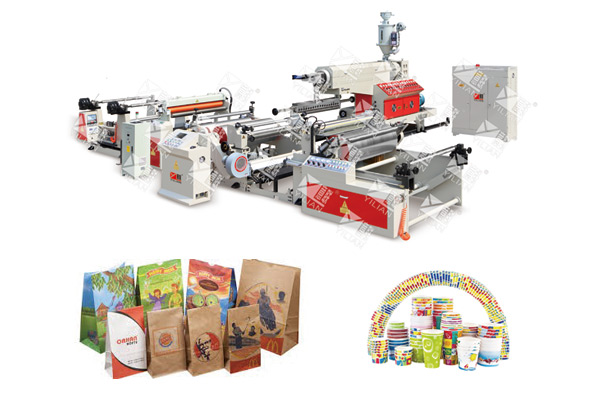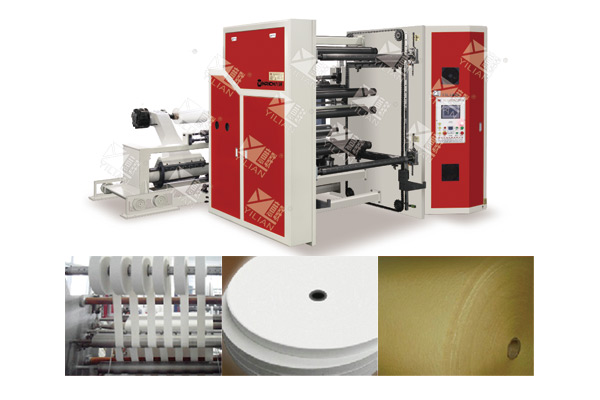
Can Extrusion Coating Lamination Machine Coat Both Sides in One Pass?
Datetime: 11/4/2026 1:41:00 PM Visit: 10
Yes—when the Extrusion Coating Lamination Machine carries two independent mainframes, each with its own extruder and die head. That dual-mainframe architecture coats both sides of a paper, foil, or film substrate in a single pass, eliminating the second unwind-rewind cycle that a single-mainframe line requires. This article explains how the two extruders work together, what the 2–4 layer capability covers, and what to verify when you're matching a double-sided coating line to aseptic packaging or multi-layer flexible materials.
What Does a Dual-Mainframe Architecture Change?
Two Extruders, One Continuous Web Path
A conventional single-mainframe laminator applies coating to one side of the substrate. To coat the second side, the roll comes off the rewinder and goes through the line again, or through a separate machine. Each additional pass exposes the substrate to heat, tension, and handling, and each pass adds a roll change and a threading step.
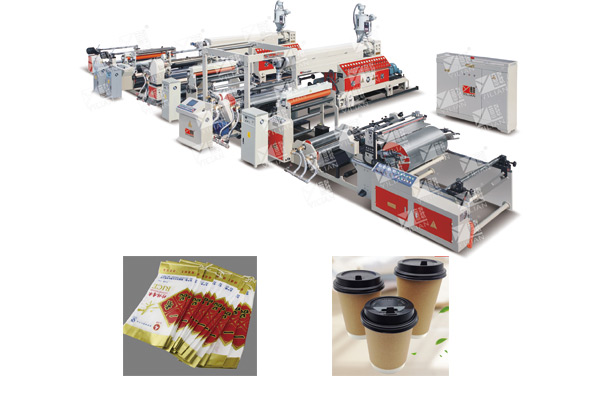
The dual-mainframe design mounts two independent extrusion blocks on the same line. The substrate unwinds once, passes the first extruder, receives its first coating layer, continues through the second extruder, receives the second layer, and rewinds as a finished double-sided product. The web never leaves the machine between coatings, which eliminates the handling damage and the registration re-setup that a second pass would require.
Independent Temperature and Output Control
Each mainframe has its own extruder, its own die head, and its own temperature control. That independence matters when the two sides of the product use different polymers or different coating weights. One extruder can run LDPE at a lower melt temperature while the other runs a higher-temperature resin, and neither affects the other's output.
The SJFM 1000-2000D series supports 2–4 layers across the two extruders, with extrusion output from 10 kg/h to 280 kg/h depending on the model. The screw L/D ratio ranges from Φ90 28:1 on the smallest model to Φ110 33:1 on the largest, giving the larger machines more residence time for homogenizing the melt before it reaches the die.
| Parameter | SJFM-1000 | SJFM-1300 | SJFM-1800 |
|---|---|---|---|
| Compounding speed | 100–150 m/min | 100–150 m/min | 100–150 m/min |
| Net laminating width | 500–900 mm | 600–1250 mm | 1000–1750 mm |
| Laminating thickness | 0.010–0.1 mm | 0.010–0.1 mm | 0.013–0.1 mm |
| Laminating layers | 2–4 | 2–4 | 2–4 |
| Extruding quantity | 10–150 / 20–150 kg/h | 10–200 / 20–200 kg/h | 10–280 / 30–280 kg/h |
| Screw L/D ratio | Φ90 28:1 | Φ105 30:1 | Φ110 33:1 |
| Total power | 110 kW | 150 kW | 200 kW |
| Dimensions | 13000×8300×3200 mm | 13000×8600×3200 mm | 13000×9300×3200 mm |
Which Materials and Products Fit a Double-Sided Line?
An Extrusion Coating Lamination Machine in the dual-mainframe configuration is built for double-coated paper and multi-layer composite materials such as milk cartons, juice boxes, and beverage boxes. Those aseptic packaging products need a coating on both the inside and outside surfaces: the inside for liquid barrier and the outside for print protection and moisture resistance.
The compatible polymers include LDPE, PP, EVA, PLA, and PBS. LDPE and PP are the workhorses for conventional barrier and seal layers. EVA provides adhesion to foil and other difficult substrates. PLA and PBS are the bio-based options for compostable packaging. The substrate range covers BOPP, BOPET, BOPA, CPP, CPE, paper, aluminum foil, and non-woven fabric.
What Keeps the Coating Consistent Across Two Stations?
The line uses a PLC and HMI touch panel with centralized automatic web tension control. That tension control is what keeps the web flat through both coating stations: if the tension varies as the roll diameter changes, the coating weight drifts and the barrier performance becomes inconsistent.
A corona discharge station activates the substrate surface before coating. That surface treatment is what ensures the polymer adheres to the substrate rather than sitting on top of it as a weakly bonded film. The line also includes a liquid cooling system for melt chilling, which sets the coating quickly so the second station does not disturb the first layer.
Where Does a Dual-Mainframe Line Fit in Packaging Production?
A Extrusion Coating Lamination Machine with dual mainframes is used in aseptic packaging, liquid cartons, and multi-layer flexible packaging where the product needs coating on both surfaces. The 100–150 m/min compounding speed matches the output of a high-volume carton converting line, and the 500–1750 mm net laminating width covers the web widths used in milk carton and beverage box production.
The SJFM 1000-2000D from Winrich Machinery is built around that one-pass double-sided architecture, with two independent extruders, dual die heads, and a non-stop turret unwinding and rewinding system. The 13000 mm overall length reflects the floor space required for the two mainframes and the cooling and treatment sections between them.
What Should You Check Before Selecting a Double-Sided Line?
How do I match the width to my product?
The five models cover net laminating widths from 500–900 mm on the SJFM-1000 to 1000–1750 mm on the SJFM-1800. Match the width to your widest substrate roll plus the edge trim allowance. A milk carton web typically runs in the 1000–1400 mm range, which the SJFM-1300 or SJFM-1600 covers.
What power and heating infrastructure does the line need?
The total power ranges from 110 kW on the SJFM-1000 to 200 kW on the SJFM-1800. The system also requires a substantial heating time before production—90–150 hours according to the specification for comparable double-mainframe models. That heating window has to be factored into the production schedule, especially for cold starts after a weekend shutdown.
What maintenance does the dual-extruder system need?
Inspect both die lips for polymer buildup—carbonized deposits on either die cause streaks and thickness variation. Check the screen pack pressure on both extruders; a clogged screen on one side reduces that extruder's output and shifts the layer ratio. Verify the corona treater electrodes for wear, and clean the cooling rollers for consistent heat transfer.
Straight Answers on Double-Sided Extrusion Coating
What's the difference between a single-mainframe and a dual-mainframe laminator?
A single-mainframe machine applies one coating layer per pass. A dual-mainframe machine carries two independent extruders and applies coating to both sides in one continuous pass. The dual-mainframe design eliminates the second unwind-rewind cycle and the handling between passes.
Can the two extruders run different materials?
Yes. Each mainframe has its own extruder, die, and temperature control, so one side can run LDPE while the other runs PP, EVA, or a bio-based resin. The independent control is what allows the line to build asymmetric structures with different properties on each surface.
What is the maximum laminating thickness?
The standard range is 0.010–0.1 mm on the SJFM-1000 through SJFM-1300 models, and 0.013–0.1 mm on the SJFM-1600 and SJFM-1800. Thicker coatings may require a slower line speed to give the cooling roller time to set the polymer.
Does the line require a special foundation?
The machine dimensions run from 13000×8300×3200 mm to 13000×9300×3200 mm, and the total power reaches 200 kW on the largest model. A line of that length and mass requires a foundation designed for the static load and the vibration of two extruders running simultaneously. Confirm the floor loading and the foundation specification before installation.
Let's Match a Double-Sided Line to Your Packaging
Share Your Substrate, Width, and Layer Structure
An Extrusion Coating Lamination Machine with dual mainframes should match your substrate width, polymer combination, and layer structure—not the other way around. The SJFM 1000-2000D double mainframe extrusion film laminating machine from Winrich Machinery coats both sides in one pass at 100–150 m/min, handles 500–1750 mm net widths across five models, and supports 2–4 layers with independent extruder control and 110–200 kW total power. If you're specifying a line for aseptic cartons, liquid packaging, or multi-layer flexible materials, send us your substrate, width, and layer structure — we'll help you confirm the right model before you order.