Extrusion Coating Lamination Machine Parameters for Aluminum Foil Substrate
Datetime: 6/29/2026 10:29:00 AM Visit: 592
You've got a roll of aluminum foil — 20 microns, mirror‑smooth, perfect barrier properties. The customer wants it coated with LDPE for a pharmaceutical blister pack. You set up the extrusion coating lamination machine the same way you would for paper. The coating comes out with pinholes. The adhesion fails the tape test. The roll goes to scrap.
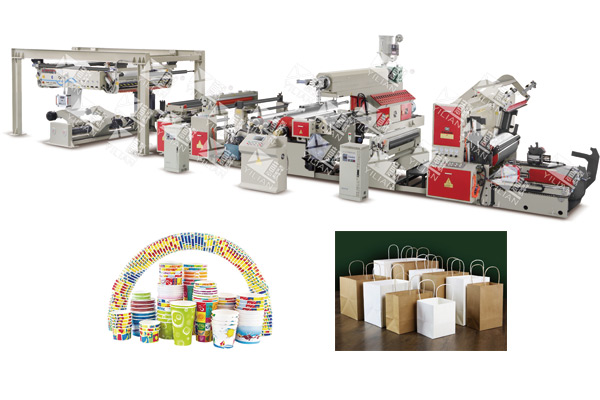
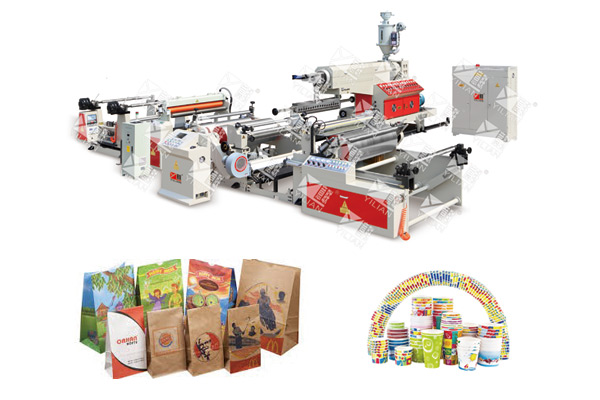
Aluminum foil is not paper. Its smooth surface, high thermal conductivity, and sensitivity to oxidation demand a different approach. An extrusion coating lamination machine running foil needs lower melt temperatures, shorter air gaps, cooler drums, and higher nip pressures than any other substrate. The Winrich GSFM 360 turn‑over automatic extrusion lamination machine delivers a 650mm coating width and 400m/min line speed, but even the best machine needs the right settings. This guide provides starting parameters for LDPE and EAA coatings on 6–40µm foil, plus adhesion verification and troubleshooting advice.
Melt temperature — lower is better for foil
The resin's melt temperature has the biggest impact on coating quality. On foil, the safe window is narrower than on paper.
LDPE — 280–300°C
For LDPE coating on aluminum foil, target a melt temperature of 280–300°C. That's 15–20°C lower than what you'd use for paper or board. The lower temperature reduces oxidation and discoloration of the polymer, which is more visible on foil's reflective surface. It also minimizes the risk of degrading the foil's temper or creating pinholes. Running above 310°C on thin foil almost guarantees adhesion failure and visible yellowing.
EAA — 290–310°C
Ethylene acrylic acid (EAA) copolymer has polar groups that bond directly to aluminum oxide, giving it better adhesion to foil without a primer. EAA requires a slightly higher melt temperature — 290–310°C — to ensure the acid groups are fully activated for bonding. The trade‑off is narrower processing window; straying more than 5°C outside this range can cause either poor adhesion (too cold) or gel formation (too hot).
PP — not recommended without primer
Polypropylene does not adhere well to aluminum foil without a tie layer or primer. The non‑polar nature of PP means it won't form a chemical bond with the oxide layer. If you must coat PP on foil, use a co‑extrusion structure with a tie layer (like an acid‑modified polypropylene) or apply a solvent‑based primer before coating.
Air gap — shorter is safer
The air gap is the distance from the die lip to the nip point where the molten resin meets the foil. On foil, you want it as short as practical.
Standard range — 50–70mm
For aluminum foil, target an air gap of 50–70mm. This is shorter than the 80–120mm typical for paper. A shorter gap reduces the time the molten resin spends in air, minimizing oxidation and temperature drop. The resin stays hot enough to wet out the foil surface, which is critical for adhesion.
Why shorter gaps matter on foil
Foil is smooth and non‑absorbent. It doesn't provide any mechanical "bite" for the coating. Adhesion depends entirely on chemical bonding and wetting. A longer air gap allows the melt to cool below its wetting temperature before it contacts the foil, resulting in poor adhesion and potential delamination.
Watch out for splices
A short air gap leaves less clearance for foil splices or overlaps. If your foil has taped splices that create a thickness bump, the die lip can collide with the splice. Install a splice detector or reduce the air gap only after confirming your splices are flush.
Cooling drum — keep it cool
Foil conducts heat away from the coating faster than paper. That's an advantage for line speed, but it requires active cooling management.
Target temperature — 15–25°C
Set the cooling drum surface temperature to 15–25°C for foil. That's about 10°C lower than what you'd use for paper. The lower temperature rapidly quenches the molten resin, locking in the amorphous structure that gives good adhesion and clarity.
What happens when it's too warm
If the cooling drum is above 30°C, the resin crystallizes slowly. The coating takes on a hazy, milky appearance — a white fog that's especially visible on foil's reflective surface. More importantly, slow crystallization allows the resin to shrink unevenly, creating stress that weakens the bond. The coating may pass the tape test immediately but fail after 24 hours.
Use chilled water circulation
Don't rely on tap water for foil cooling. Install a recirculating chiller that maintains a stable supply temperature. Check the drum surface temperature with an infrared thermometer at multiple points across the width — a variation of more than 5°C indicates water flow issues or drum scaling.
Nip pressure — more force, better bond
Foil is smooth and stiff. It needs higher pressure to force the molten resin into intimate contact with the surface.
Target line pressure — 40–60 N/mm
For aluminum foil, set the nip line pressure to 40–60 N/mm. That's about 20% higher than the 30–50 N/mm typical for paper. The extra pressure compensates for foil's lack of surface roughness, ensuring the resin is pressed firmly against the oxide layer for maximum contact area.
Roll hardness — 85–90 Shore A
Use a pressure roll with hardness of 85–90 Shore A. A harder roll concentrates pressure at the nip, creating higher localized pressure without increasing total load. Softer rolls (below 80 Shore A) deform too much on foil, spreading pressure over a wider area and reducing the effective bond strength.
Check nip width — 6–10mm
The nip width — the visible flattening of the pressure roll against the cooling drum — should be 6–10mm. If it's narrower, increase pressure. If it's wider, you may be over‑pressuring the roll, which can damage bearings and shorten roll cover life.
Adhesion verification without lab equipment
You don't always have a lab available during setup. These two field tests give you a quick read on bond quality.
Tape test — 3M 810
Apply a strip of 3M 810 tape (or any high‑tack tape with consistent adhesion) firmly to the coated foil surface. Press it down with your thumbnail or a hard roller. Pull it off quickly at a 90° angle. If the coating comes off with the tape, adhesion is inadequate. If the tape pulls clean and the coating stays on the foil, you're in the right range. For critical applications, follow up with a more quantitative test.
Solvent rub — MEK wipe
Dampen a cotton swab or soft cloth with methyl ethyl ketone (MEK). Rub the coated surface firmly for 10–15 passes. If the coating softens, smears, or comes off, the cross‑linking or crystallization is incomplete — usually from insufficient cooling or low melt temperature. If the coating resists the solvent and the foil remains covered, adhesion is good.
Log batch numbers
Foil surface chemistry varies by supplier and batch. The residual rolling oil left on the foil — measured in mg/m² — affects adhesion. Record the batch number and supplier for every roll. When you find a batch that runs well, note the parameters. When a batch fails, you'll know it's the material, not the machine.
Solving common foil lamination defects
Two defects are particularly common when coating foil. Here's how to fix them.
Pinholes
Pinholes are tiny voids in the coating where the foil shows through. They're caused by contaminants in the melt — oxidized resin, degraded polymer, or metal fragments from the screen pack. Lower the extruder back‑pressure and check the screen pack for metal debris. If pinholes appear only at the start of a run, they're likely from degraded resin that purged out. If they persist, increase the screen mesh or change the screen pack more frequently.
Coating shrinkage or wrinkling
If the coating pulls away from the edges or creates wrinkles in the foil, the melt temperature is too high or the draw ratio is excessive. Reduce melt temperature by 5–10°C. Also check the draw ratio — the ratio of line speed to extrusion speed. Keep it between 1:1 and 1:1.2 for foil. Higher draw ratios stretch the molten resin, creating internal stress that releases as shrinkage.
Below is a quick reference table for key foil coating parameters:
| Parameter | Foil (6–40µm) | Paper (for comparison) |
|---|---|---|
| LDPE melt temp | 280–300°C | 300–320°C |
| EAA melt temp | 290–310°C | 310–325°C |
| Air gap | 50–70mm | 80–120mm |
| Cooling drum temp | 15–25°C | 25–35°C |
| Nip pressure | 40–60 N/mm | 30–50 N/mm |
| Roll hardness | 85–90 Shore A | 80–85 Shore A |
| Nip width | 6–10mm | 8–12mm |
Questions about foil extrusion coating
Q: Can I use recycled LDPE on foil?
A: It's risky. Recycled LDPE contains contaminants — degraded polymer, paper fibers, ink residues — that create gels and pinholes in the thin coating required for foil. If you must use recycled material, limit it to 10–20% of the blend, increase the screen mesh to 150–200, and expect shorter screen life. For pharmaceutical or food‑contact foil, use only virgin resin.
Q: Why does my coated foil smell after storage?
A: The smell is usually residual volatile organic compounds (VOCs) from the resin — either unreacted monomers or degradation by‑products. It indicates the melt temperature was too high, causing polymer chain scission. Reduce the melt temperature by 5–10°C and check the extruder residence time. If the smell persists, the resin itself may be off‑spec. Switch to a resin with a lower volatile content.
Q: Do I need corona treatment on aluminum foil?
A: Usually not. Aluminum foil already has a thin oxide layer that provides good surface energy for polar resins like EAA. Corona treatment can actually degrade the oxide layer on very thin foil (<10µm). For LDPE, which is non‑polar, corona treatment won't help enough — use a primer or a tie layer instead.
How Winrich Machinery supports foil coating applications
Winrich Machinery's GSFM 360 turn‑over automatic extrusion lamination machine is built for the precision that foil demands. The machine offers a 650mm coating width and 400m/min line speed, with options for single‑layer, multi‑layer, and heat‑seal coating configurations. Precision machining centers ensure component quality, and the assembly team brings over 20 years of expertise to every build.
For flexible packaging engineers, the combination of adjustable nip pressure, precise temperature control, and the ability to run both LDPE and EAA makes the GSFM 360 a practical choice for foil lamination. Before you commit to a full production run on a new foil batch, run a short trial with the parameters in this guide. Test adhesion with the tape and solvent methods. Record the batch number and the settings that worked. A few hours of validation saves a whole roll of scrap.
Need help setting up your extrusion coating lamination machine for aluminum foil? Contact Winrich Machinery for a trial coating run with your foil and resin. Share your foil thickness, target resin, and line speed — their technical team can provide customized starting parameters for your specific application.