Guide to Setting Paper Slitting Machine for Lightweight Kraft Paper
Datetime: 6/4/2026 2:19:00 PM Visit: 529
A paper converter switches from 80gsm kraft to a 40gsm lightweight roll for eco‑friendly mailers. The first run produces torn edges, fuzzy cut lines, and rolls that stick together on the pallet. Lightweight kraft (30‑60gsm) behaves nothing like its heavier counterpart. It stretches under tension, flutters at the cutting point, and generates static that makes narrow strips cling. A Paper Slitting Machine that handles 120gsm board with ease will destroy thin kraft if settings aren‘t adjusted. This guide provides baseline parameters for blade selection, gap settings, and rewind tension—plus the field adjustments that turn a frustration into a profit.
Which slitting method handles thin kraft best
The first decision is whether to use razor or shear slitting. For lightweight kraft (30‑60gsm), the choice depends on basis weight.
Razor slitting (pressed‑in razor blade). For kraft ≤40gsm, razor slitting produces the cleanest edge with minimal dust. The thin, sharp blade slices through the paper fibers without compressing them. Position the blade at a 19‑22° angle relative to the web surface. For lightweight kraft, a shallower angle (15‑20°) increases blade life, while a steeper angle (25‑30°) improves cut quality but wears the blade faster. Razor slitting also accommodates high web speeds—up to 800‑1200 m/min for lightweight grades. Blade replacement interval for 30‑60gsm kraft is 8‑12 hours of continuous operation.
Shear slitting (rotary knives). For kraft 40‑60gsm, shear slitting is an alternative. A pair of circular blades creates a scissor‑like action, with the top blade slightly overlapping the bottom blade. For lightweight kraft, keep overlap minimal—1‑2% of material thickness—to avoid crushing the paper and creating fuzzy edges. Side clearance between blades should be 0.02‑0.05mm. Shear slitting produces a burr‑free edge but generates more dust than razor slitting and requires more maintenance.
Blade gap and overlap – the numbers that matter
Once the slitting method is selected, blade positioning determines edge quality.
For razor slitting on 30‑60gsm kraft:
-
Blade extension: 0.5‑2.0mm beyond the anvil surface
-
Holder pressure: 0.4‑0.8 bar pneumatic for consistent penetration
-
Blade material: Ceramic‑coated steel for abrasive kraft grades
For shear slitting on 40‑60gsm kraft:
-
Side clearance (gap): 0.02‑0.05mm between opposing blade faces
-
Overlap (vertical engagement): 0.3‑0.5mm, roughly 1‑2% of material thickness
-
Blade angle: 45° bevel for standard kraft; 30‑35° for lighter grades
Rewind tension strategy to prevent blocking
Lightweight kraft is prone to “blocking”—adjacent layers sticking together on the finished roll. This happens because thin paper has less air entrapment between layers and static charges pull the surfaces together.
Taper tension curve. Set initial rewind tension at 0.8 N per centimeter of web width, then taper down to 0.3 N/cm at the finished roll diameter. In practice, for a 600mm wide roll of 40gsm kraft, start at 48 N and taper to 18 N as the roll builds. Automatic taper tension control reduces rewinding tension as roll diameter increases, preventing core crush and layer‑to‑layer adhesion.
Differential rewind shafts. When slitting a wide parent roll into multiple narrow rolls, differential shafts are essential. Each slit strip winds on its own core, and the differential shaft applies adjustable torque to each core independently. This compensates for diameter differences that inevitably develop between the narrow rolls. Without differential winding, outer strips tighten while inner strips loosen, creating inconsistent roll hardness and eventual blocking.
Rewind hardness target. Use a handheld durometer to measure roll hardness. For lightweight kraft, target 75‑85 Shore A on a universal durometer scale. Softer rolls block; harder rolls risk crushing the core.
Dealing with static electricity
Lightweight kraft running at high speed generates significant static charge. The paper rubs against rollers and guide surfaces, building charges that make adjacent strips cling together at the rewind.
Low‑cost passive solution. Install grounded copper tinsel or wire brushes upstream of the rewind section, just touching the paper surface. When properly grounded, metal core tinsel can dissipate static by induction.
Active ionizing bars. For persistent static, install powered ionizing static eliminators (e.g., SB5/SB6 type bars) on the frame of the lay‑on rollers immediately before the rewind shafts. These bars generate positive and negative air ions that neutralize static charges on the paper surface. Typically two bars—one on each side of the web—are sufficient.
Grounding check. Ensure all metal components in the web path are properly grounded to a common earth point. Unguarded bearings or isolated rollers can accumulate charge and discharge unpredictably, causing operator shocks or sparking.
Test roll verification checklist
Before running a full production order, verify these five parameters:
-
Width tolerance: Slit width within ±0.5mm of specification
-
Edge quality: No visible fuzz, burrs, or tears along the cut edge; edges should feel smooth when drawn lightly across a fingertip
-
Rewind hardness: 75‑85 Shore A across all slit rolls, measured at three points: core, middle, and outer wrap
-
Static test: Separate freshly wound strips; they should release without clinging or crackling
-
Telescoping check: Roll ends should be flush; any protruding edges indicate tension imbalance or misaligned lay‑on roller
Answers to operator questions
Q: Can I use the same settings for recycled lightweight kraft?
A: Recycled kraft has shorter fibers and higher dust content. Reduce blade overlap by 20‑30% and increase static elimination—recycled paper generates more static than virgin kraft. Expect blade life to be approximately half that of virgin paper; inspect every 4‑6 hours instead of 8‑12.
Q: How do I know if my razor blade is dull without stopping?
A: Look for three signs: increased paper dust accumulation around the blade holder, a visible “white line” of fibrillated fibers along the slit edge, or gradual narrowing of slit width (dull blades push paper aside rather than cutting cleanly). Also monitor rewind roll hardness drift—dull blades cause inconsistent tension uptake across slits.
Q: Should I increase nip roll pressure for thin paper?
A: No. Lightweight kraft requires lower nip pressure. Excessive nip pressure compresses the paper, squeezes out air, and promotes blocking. For 30‑60gsm kraft, reduce lay‑on roller pressure to the minimum that still maintains contact—typically 30‑50% of the pressure used for 100gsm board.
When to call for support
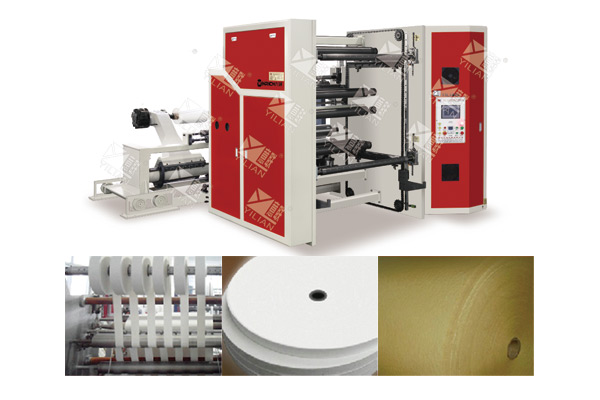
If test rolls still show edge defects after adjusting blade geometry, tension, and static elimination, the issue may be deeper. Check for worn anvil roll grooves (razor slitting), bearing play in the shear knife assembly, or load cell drift in the tension control system. Record your parameters, take photos of the defect, and capture a short video of the web path during slitting. Winrich‘s technical team can diagnose remotely from this information and recommend whether a blade holder replacement, anvil resurfacing, or control system recalibration is required. Winrich manufactures the FQJ 1100B-2200B microcomputer high-speed paper slitter and rewinder, a machine series built for consistent slitting across a wide range of paper grades—from lightweight kraft to heavy board—with precise microcomputer control over tension zones, blade positioning, and rewind taper.
→ Request a quote from Winrich for the FQJ 1100B-2200B microcomputer high-speed paper slitter and rewinder — Share your kraft paper weight (gsm), slit width requirements, and daily production volume. Their technical team will recommend blade type, tension presets, and rewind shaft configuration for your lightweight paper application.