How to Fix Edge Wrinkling on Non Woven Double Sides Lamination Machine
Datetime: 5/29/2026 1:49:00 PM Visit: 681
You are running SMS or spunbond nonwoven through a double sides lamination line. The center of the web looks perfect, but both edges develop a 2–3 cm wave that ruins the finished roll. Edge wrinkling is the most frustrating defect on an Extrusion Coating Lamination Machine because it appears after the material has already passed through multiple rollers—by the time you see it, you have already wasted meters of expensive fabric. Worse, those wavy edges often cause the slitter to wander, turning a salvageable roll into total scrap. Based on real production experiences across multiple nonwoven laminators, edge wrinkling rarely comes from the obvious suspects. The root causes are usually hidden in plain sight: uneven tension across the web, a spreader roller that is slightly off, nip pressure that is heavier on one side, or a web guide that simply is not keeping up. This guide walks through each cause in order of how often they appear, gives you a simple test for each, and shows how to fix it—no parts replacement required.
When tension pulls harder on one side
The most common cause of single-sided edge wrinkling is a difference in tension between the left and right sides of the unwind roll. When one side of the web is pulled tighter than the other, the material shifts toward the tighter side, leaving the opposite edge loose and prone to wrinkling. This is especially visible on SMS and spunbond nonwovens because they have low bending stiffness and cannot resist lateral compression.
Quick check. With the machine stopped, pull the web at the unwind by hand on both edges. The resistance should feel equal. If one side pulls noticeably harder, the brake system is unbalanced.
Fix. Adjust the pneumatic brake pressure regulators on both sides of the unwind stand until the hand-pull resistance matches. For machines with taper tension control, check the taper curve settings. If the tension drops too quickly as the roll diameter decreases, the core end of the roll may experience a sudden tension spike. Reduce the taper percentage in 5% increments until edge behavior stabilizes.
What your banana roller might be doing wrong
The banana roller (bow-shaped spreader roll) is the most easily overlooked component on a nonwoven lamination line. Its job is simple: re‑spread the fiber web that tends to narrow toward the center, keeping edges flat. But the roller‘s arc angle must be just right. Too small an angle, and it fails to spread. Too large an angle, and the center gets overstretched, causing wrinkles in the middle. Many banana rollers are set correctly at the factory, but after years of use or several roll changes, the locking bolts loosen and the angle drifts.
Quick verification. Run the machine at low speed. Use chalk to draw several lines on the banana roller surface parallel to the axis. Observe how these lines change as they pass through the spreading section. If the lines in the center remain clear while the lines at the ends widen noticeably, the spreading effect is normal. If all lines remain parallel with no change, the roller is ineffective and needs adjustment. Loosen the locking bolts at both ends of the banana roller, rotate the roller approximately 5 degrees clockwise or counterclockwise, retighten the bolts, and run a test. Typically, rotating the roller 5–10 degrees toward the incoming web direction will significantly improve edge wrinkling.
How uneven nip pressure creates edge waves
The laminating nip applies pressure across the full web width to bond nonwoven to film or another nonwoven. If the pressure is higher on one side, the material shifts toward the lower-pressure side, creating edge wrinkles exactly where the web exits the nip.
Pressure indicating film test. Cut a strip of pressure indicating film (e.g., Fuji Prescale) the width of the web. Insert it between the nip rolls, apply pressure at normal operating force, then remove and examine the color density. Darker color indicates higher pressure. Uneven coloration across the width means pressure imbalance.
Fix. Adjust the pneumatic regulators for the left and right nip cylinders until the pressure indication film shows uniform color. For machines with mechanical spring loading, measure the compressed spring height on both sides. If one spring is shorter, replace both springs as a matched pair. Also check that the bearing housings slide freely in their guides—any binding will cause false pressure readings.
When the edge guide cannot keep up
When the edge guide (EPC) response is too slow, the web drifts sideways before entering the oven or laminating section. By the time the guide corrects, the material has already shifted and folded at the edge. The folds then become locked in by heat or adhesive pressure, appearing as permanent edge wrinkles.
Response test. While the machine runs at normal speed, push the web edge sideways by about 5 mm using a wooden stick or gloved hand. Measure how long the guide takes to bring the web back to its original position. Acceptable response time is under 0.5 seconds.
Fix. Clean the edge sensor lens with a soft cloth—dust is a common culprit. Enter the controller settings and increase the sensitivity or response speed parameter in 5% increments until the guide reacts quickly without oscillation. If the controller is older than 10 years, consider upgrading to a modern model with predictive algorithms.
| Symptom | Most Likely Cause | Test Method | Adjustment |
|---|---|---|---|
| One-side edge wrinkle | Unwind tension imbalance | Hand pull test | Balance brake pressure; adjust taper tension |
| Center-tight edge wave | Banana roller angle off | Chalk line on roller | Rotate roller 5-10 degrees |
| Wrinkle after nip | Nip pressure imbalance | Pressure indicating film | Balance cylinder pressure or spring height |
| Drift-and-lock wrinkle | Slow EPC response | Push edge test | Clean sensor; increase sensitivity |
When you have tried everything and still see wrinkles
If all four checks pass but edge wrinkles persist, the problem lies deeper than operator adjustments. Three scenarios require professional equipment:
-
Bent oven or idler rolls. A roll with more than 0.1 mm runout measured with a dial indicator can cause cyclic tension variations. Replace or recondition the roll.
-
Deformed frame or guide rails. The web path from the spreader roller through the nip to the oven entrance must be perfectly straight. Laser alignment tools can reveal deviations of just 1–2 mm that are invisible to the eye.
-
Worn bearings causing vibration. Even a small amount of play in a bearing can create a chatter pattern that shows up as edge wrinkles. Use a vibration meter to measure amplitude across the machine frame.
In these cases, contact the machine manufacturer. Record all data from the four basic checks before calling—this helps technicians diagnose faster.
Answers to common operator questions
Q: Does lighter nonwoven (15 gsm) cause more edge wrinkling than heavier ones?
A: Yes. Lighter nonwovens have lower bending stiffness, making them more sensitive to tension spikes and airflow disturbances. When running 15–20 gsm material, reduce line speed by 20–30% for initial setup, then increase gradually while monitoring edges. Use lower unwind tension—about 15–20% less than for 40–50 gsm material.
Q: Does preheating help reduce edge wrinkles?
A: Sometimes. Preheating relaxes residual stress from roll winding, but mainly when the material was stored cold or has high moisture content. For standard nonwovens stored at room temperature, preheating may soften edges and make them more prone to stretching. If you want to try, increase preheat zone temperature in 5°C steps while observing edge behavior.
Q: Our machine uses spring-loaded nip. Can we still balance pressure?
A: Yes. Spring-loaded systems are harder to balance than pneumatic ones, but it is possible. Check the compressed spring height on both sides; they should match within 1 mm. If one spring shows visible wear or deformation, replace both springs as a matched pair. Add shims to the shorter side to equalize preload.
Q: How long does a typical tuning session take?
A: For an experienced operator, the full four-step diagnosis takes 30–45 minutes. Most of the time is spent waiting for material to run through after each adjustment. Keep a log of baseline settings so you can revert quickly if an adjustment makes things worse.
Why Winrich designs with edge control in mind
When a production environment demands consistent edge quality across SMS, spunbond, and other nonwovens, equipment design plays a decisive role. Winrich has over 20 years of expertise manufacturing extrusion coating laminators to exacting standards, with a design team that specializes in custom drawings for all models. Their assembly team applies rigorous testing before shipment to ensure superior quality assurance.
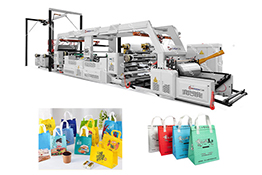
The SJFM 1300D-2600D Extrusion Coating and Laminating Machine (Auto Unload) is engineered for the specific demands of nonwoven lamination. Key features include precision machining centers that ensure high-quality components tailored to extrusion coating laminators, optional equipment sourced from leading national brands to meet customer preferences, and a wide range of customization options for machine specifications including colors, sizes, and specific requirements. Comprehensive after-sales service includes a professional team of service experts providing 24/7 consulting support to improve overall operational efficiency. Applications include food packaging, pharmaceuticals, and industrial uses, with the flexibility to handle diverse customer production needs. When you encounter edge wrinkling or other lamination defects, Winrich’s technical team can provide remote support for parameter guidance. If field fixes fail—typically after all four diagnostic steps have been exhausted and the problem points to deeper mechanical issues—their service experts can arrange on-site inspection.
→ Request a quote from Winrich for the SJFM 1300D-2600D Extrusion Coating and Laminating Machine (Auto Unload) — Share your typical nonwoven substrate, web width, and production speed. Their technical team can recommend machine configurations and provide troubleshooting support.