How Often Should You Replace Blades on Paper Slitting Machine
Datetime: 6/18/2026 11:19:00 AM Visit: 581
You’re standing at the slitter, watching a roll come off the rewinder. The edge is fuzzy. The cut face has white stress lines. The roll side looks uneven. You check the maintenance log—the blades were changed “whenever they felt dull.” No one knows exactly when that was.
“Replace blades every week” wastes money. “Replace them when they stop cutting” ruins product and damages the machine. There‘s no single answer to how often a paper slitting machine needs new blades—but there are observable signs that tell you exactly when. This guide walks through the three most reliable wear indicators, gives you realistic life expectations for razor and shear blades, and shows you how to build a replacement log that turns guesswork into data. Winrich’s FQJ 1100B-2200B series microcomputer-controlled paper slitters are built with stable tension control and precise cutting technology. But even the best machine can’t compensate for a dull blade.
Three signs your blade is past its prime
Before you decide when to change blades, learn to read what the blade is telling you. These three signs appear long before the blade stops cutting entirely.
Edge fuzz — visible fibers on the cut edge
Run your finger lightly along the cut edge of the paper. If you feel tiny fibers or fuzz, the blade is no longer slicing cleanly—it’s tearing. Under magnification, a dull blade shows ragged edges where sharp blades leave a clean, straight cut. Fuzz is the earliest warning sign. If you catch it here, you can change blades before quality degrades further.
Stress whitening — white lines on the cut face
Look at the side of the cut. If you see white stress marks—streaks of whitening along the cut edge—the blade has lost its edge and is crushing the paper fibers instead of cutting them. This is particularly visible on coated papers or boards. Stress whitening means the blade is generating excessive force, which strains both the material and the machine.
Uneven rewound roll edges
Inspect the finished rolls. If the edges aren‘t straight—if they look jagged or stepped like a saw blade—the blade is no longer cutting consistently across the full width. Uneven edges cause problems downstream in printing or converting. This sign usually appears after the first two have been ignored.
Razor blades — life expectancy for single-edge slitting
Razor blades are the workhorse of paper slitting. They’re disposable, relatively inexpensive, and effective—but only when changed at the right time.
Standard paper: 8,000–12,000 meters per edge
For standard printing paper, uncoated papers, and non-woven materials, a razor blade edge typically lasts 8,000 to 12,000 linear meters. That‘s a range, not a rule—your actual life depends on paper weight, speed, and dust levels.
Abrasive materials: 1,500–2,000 meters
If you’re slitting abrasive materials—coated papers with mineral fillers, sandpaper backing, or heavily pigmented stocks—blade life drops dramatically. Expect 1,500 to 2,000 meters per edge. In these cases, ceramic blades may offer 2‑3 times longer life, though they cost more upfront.
Double-edge blades: flip, don’t wait
Many razor blades have two usable edges. When one edge dulls, flip the blade to the fresh edge. Don‘t wait until the first edge is completely dead—by then, the second edge has already been exposed to dust and debris. A simple rule: flip at the first sign of fuzz, not at the first sign of tearing.
Shear blades — resharpening interval for rotary scissors
Shear blades (rotary scissors) are more expensive than razor blades but last much longer. They can be resharpened multiple times.
Total life: 30,000–50,000 meters
A high-quality shear blade set can be resharpened 3‑5 times, giving a total service life of 30,000 to 50,000 meters. The exact number depends on the material and how well the blades are maintained.
When to resharpen: current draw increases 10%+
The most reliable indicator for shear blade resharpening is a measurable increase in cutting resistance. If your machine has a current display on the control panel, watch for a sustained increase of 10% or more above baseline. That’s the blade telling you it’s time for the grinder.
Typical interval: 6‑8 weeks for two‑shift operation
In a typical two‑shift paper converting operation, shear blades need resharpening every 6‑8 weeks. This is a guideline—your actual interval will vary with material and throughput. Track your own data for the first few cycles to establish a site‑specific schedule.
Factors that double or halve blade life
Blade life isn‘t just about the blade itself. These three factors have the biggest impact on how long your blades last.
Recycled fiber content — the hidden abrasive
Paper with high recycled fiber content contains hard contaminants—clay particles, ink residues, and filler materials—that act as abrasives against the blade edge. High‑recycled papers can cut blade life in half compared to virgin fiber stocks. If you’re running recycled board, plan for more frequent blade changes.
Machine speed — heat accelerates wear
At speeds above 300 meters per minute, friction heat builds up at the cutting edge. Heat accelerates edge degradation. If you’re running at high speed, you’ll see shorter blade life than at moderate speeds. Some operators reduce speed slightly toward the end of a blade’s life to extend it—a trade‑off worth considering.
Ambient humidity — dry paper creates dust
Low humidity makes paper more brittle and generates more static dust. That dust settles on the blade edge, creating a micro‑abrasive paste that accelerates wear. If your shop runs below 40% relative humidity, consider adding humidification—it extends blade life and improves slitting quality across the board.
Building a replacement log that works
A simple log turns blade replacement from an art into a science. Here‘s what to track.
Your log should include three columns for every blade change:
-
Date of replacement
-
Total meters run since the last change (from the machine counter)
-
Edge condition rating — Excellent (clean cut), Acceptable (minor fuzz), Poor (whitening or uneven edges)
After three months of consistent logging, you’ll have a data set that tells you the average blade life for each material you run. That average becomes your replacement trigger—you’ll know to inspect at 8,000 meters, not 6,000 or 10,000. You stop guessing and start managing.
Operator FAQs on blade replacement
Q: Can I sharpen a razor blade?
A: No. Razor blades are designed as disposable items. Attempting to sharpen them alters the edge geometry and creates inconsistent cuts. The cost of a replacement blade is far less than the cost of rejected rolls from a poorly sharpened edge.
Q: Do ceramic blades extend life on abrasive materials?
A: Yes—typically 2‑3 times longer than standard steel blades on abrasive stocks like coated papers and board with high filler content. Ceramic blades cost more upfront, but the extended life often justifies the premium on high‑wear applications. Run a trial on your most abrasive material to compare total cost per meter.
Q: What happens if I never replace shear blades until catastrophic failure?
A: Three things. First, the cut quality degrades gradually—you‘ll waste material before the blade fails completely. Second, the machine works harder, increasing motor load and wearing other components. Third, when a shear blade finally fails, it often takes the counter blade with it, turning a $200 resharpening job into a $1,000 replacement. Change blades on schedule, not after failure.
Below is a quick reference table for blade type and expected life:
| Blade Type | Material Type | Expected Life | Replacement Action |
|---|---|---|---|
| Razor (single edge) | Standard paper | 8,000–12,000 m/edge | Replace; flip to second edge at first fuzz |
| Razor (single edge) | Abrasive/coated paper | 1,500–2,000 m/edge | Replace more frequently; consider ceramic |
| Shear (rotary) | Standard paper | 30,000–50,000 m (total) | Resharpen every 6‑8 weeks (two shifts) |
| Shear (rotary) | Recycled/abrasive | 15,000–25,000 m (total) | Monitor current draw; resharpen when +10% |
How Winrich Machinery supports blade management
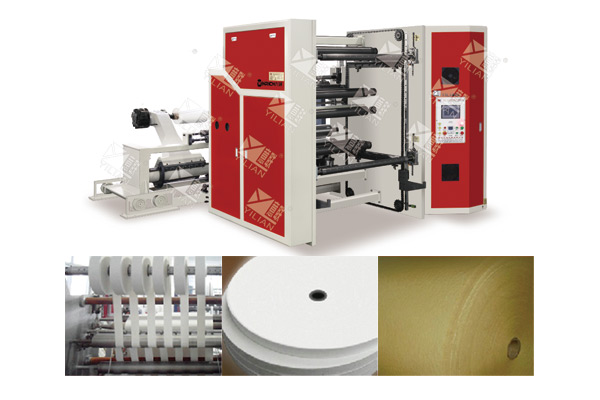
Winrich Machinery’s FQJ 1100B-2200B series paper slitter and rewinder is built for production environments where blade performance matters. The microcomputer-controlled system provides stable tension control and precise slitting technology, ensuring that blade wear is the only variable—not machine instability.
Winrich offers comprehensive after‑sales service, including spare parts availability and a one‑year warranty on the entire product range. A reliable stock of key spare parts—including blades and blade holders—minimizes downtime when replacements are needed. Their professional service team provides 24/7 consulting support to improve the overall operational efficiency of your equipment.
Before you set a blade replacement schedule, run a baseline test on your most common material. Record the meter count at the first sign of fuzz. That number becomes your replacement trigger for that material. Build your log, track your data, and stop guessing. A blade changed at the right time protects your product, your machine, and your bottom line.
Need help setting up a blade replacement schedule for your slitting operation? Contact Winrich Machinery for technical support or product information. Share your material types, average running speeds, and current blade change practices—their team can recommend blade types and replacement intervals for your specific application.